

The family, a couple and their three children, sought to create a home that would allow for a relaxed, easygoing lifestyle full of family experiences, without sacrificing a luxurious, elegant and presentable appearance. The planning starting point was to create a precise balance between an active and dynamic everyday life and meticulous aesthetics and a timeless design language.
“It was important to me that the house felt comfortable, flowing and useful for all family members, but at the same time it would convey sophistication, quality and elegance,” notes Mor. “Therefore, in the design, I combined practical solutions, durable materials and precise functional planning with meticulous contemporary elements, clean lines and details with presence.”
The program was shaped around the concept of a home that is both a host and a family home, with open and inviting public spaces that encourage meeting, playing and entertaining, alongside intimate and quiet areas that give each resident a sense of privacy and personal space. Every corner of the home was designed to convey exclusivity and tranquility, but without sacrificing warmth, accessibility and a sense of homeliness – a direct expression of the residents’ lifestyle and the way they wish to live the home on a daily basis and over time.
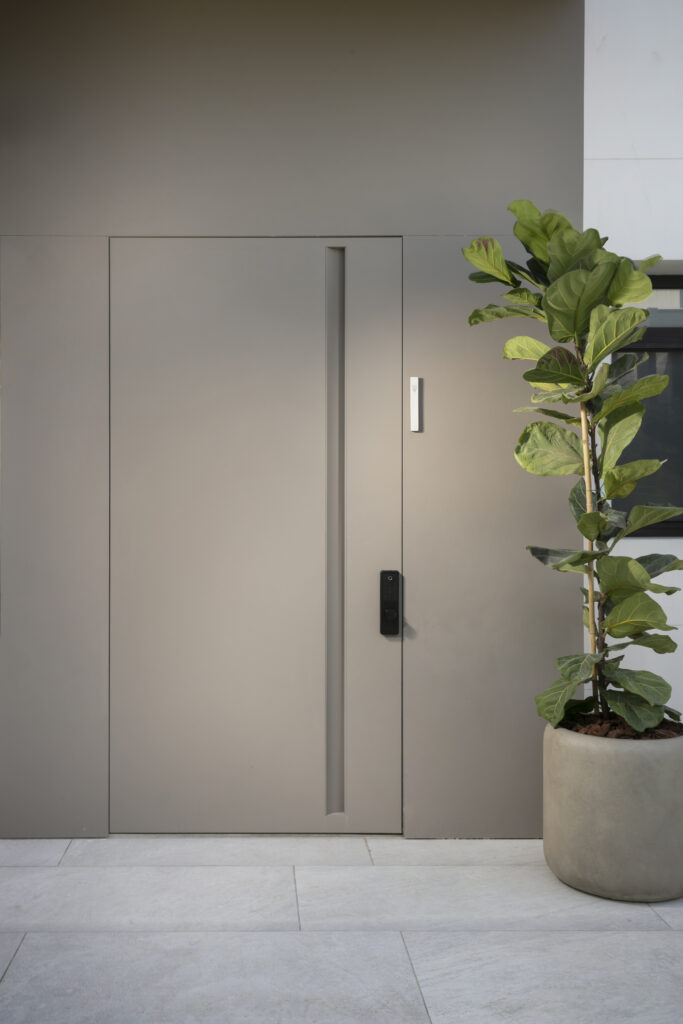
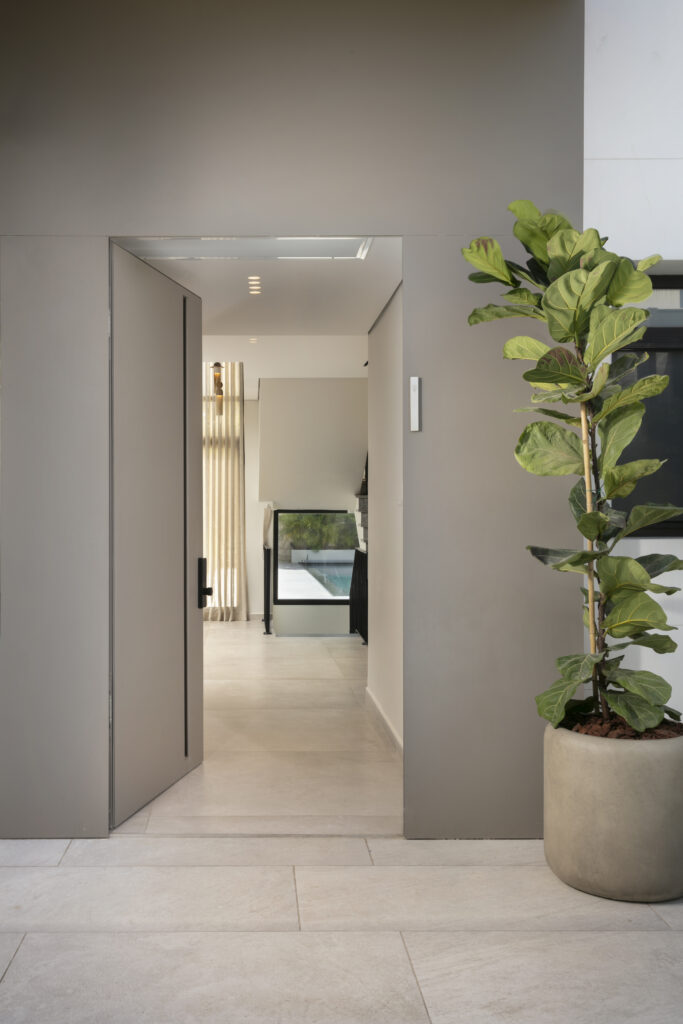
Entry to the house is through an entrance door on the zero line of the house.Reshafim-Hamedia, with an integral handle, which makes an architectural statement from the very first moment. The door is framed by a dedicated wall covering, which enhances the feeling of the key and creates an impressive, precise and meticulous composition. This is a design move designed to emphasize the entrance area as a significant transitional space that marks the transition from outside to inside and prepares the visitor for the design language of the entire house.
“The idea was to create a large, imposing door, but one that wasn’t heavy or straining,” explains Moore. “We wanted to combine a sense of luxury and architectural drama with quiet elegance, lightness, and everyday comfort.” The choice of a strong steel-based door is not only aesthetic, but also functional: the door is designed to withstand local weather conditions, making it particularly suitable for homes located near the sea, while maintaining a clean, timeless appearance for years to come.
The interior doors in the house, also chosen from Reshafim-Hamedia, continue the same concept of formal purity and precision in detail. The doors were chosen for their minimalist appearance, but mainly for their small but significant design twist, which adds depth and sophistication to the overall language of the house. “Doors from the Highline collection blend naturally with the project’s color and material palette,” notes Mor.
The doors were designed with a flat, stepless edge painted black and carefully matched to the concealed handles and hinges. This creates a continuous, clean look, and allows for a subtle and harmonious connection with the black aluminum profiles and the stair railing. The result is a uniform and precise language, in which even the most functional elements become an integral part of the architectural composition and the overall aesthetics of the house.
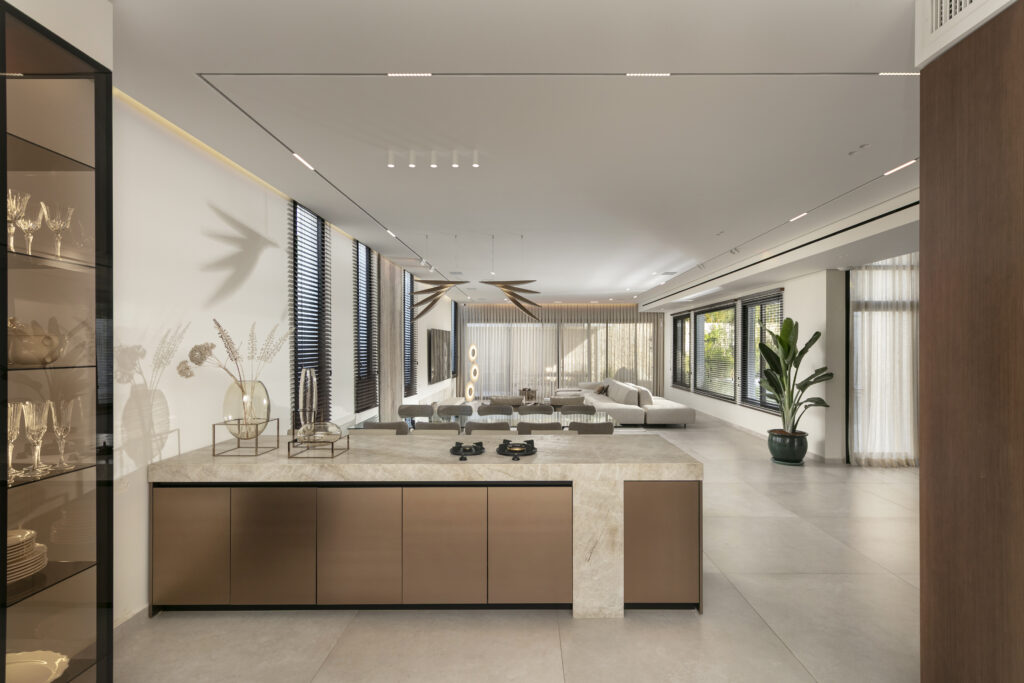
 The kitchen was designed as a central avenue in the house and designed with a clean and bright language, based on precise minimalism and a careful choice of materials. The light facades create a calm and timeless look, while the dark veneer serves as a deep contrasting element, giving the space a layer of depth and a balanced sense of warmth. The dialogue between light and dark sharpens the kitchen’s architectural lines and emphasizes its proportions as an integral part of the public space.
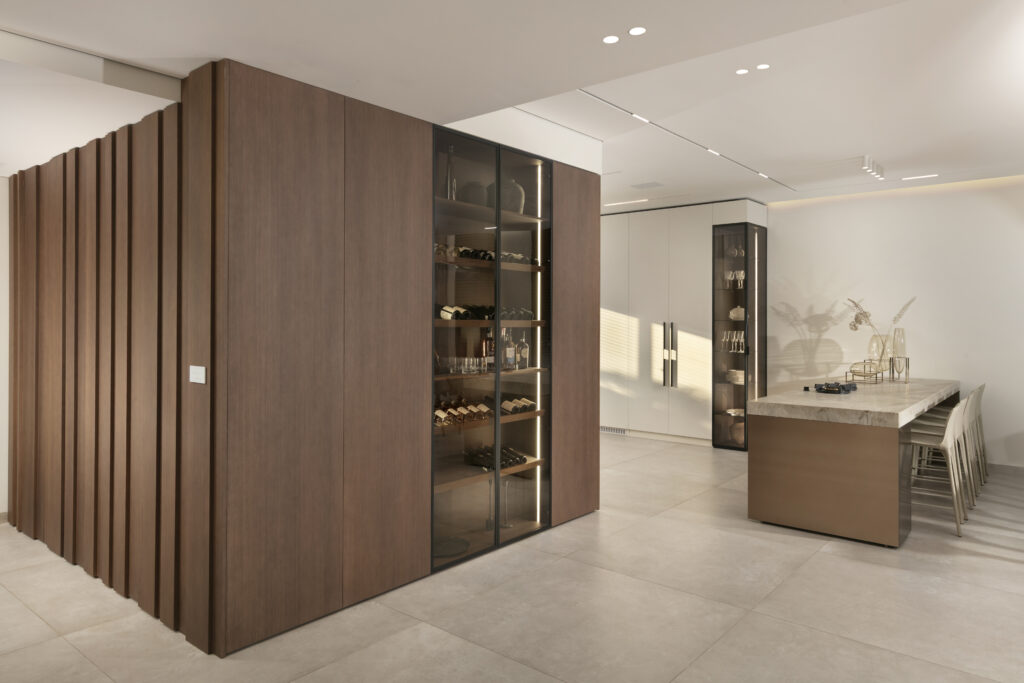
To the left of the entrance to the house, a large-scale carpentry unit, clad in dark veneer, was designed, carefully adapted to the varying wall depths and geometry of the space. Beyond its aesthetic presence, the unit plays a central functional role, concealing technical systems such as electricity and communications, and offering generous and organized storage solutions, maintaining a clean and visually uncluttered appearance.
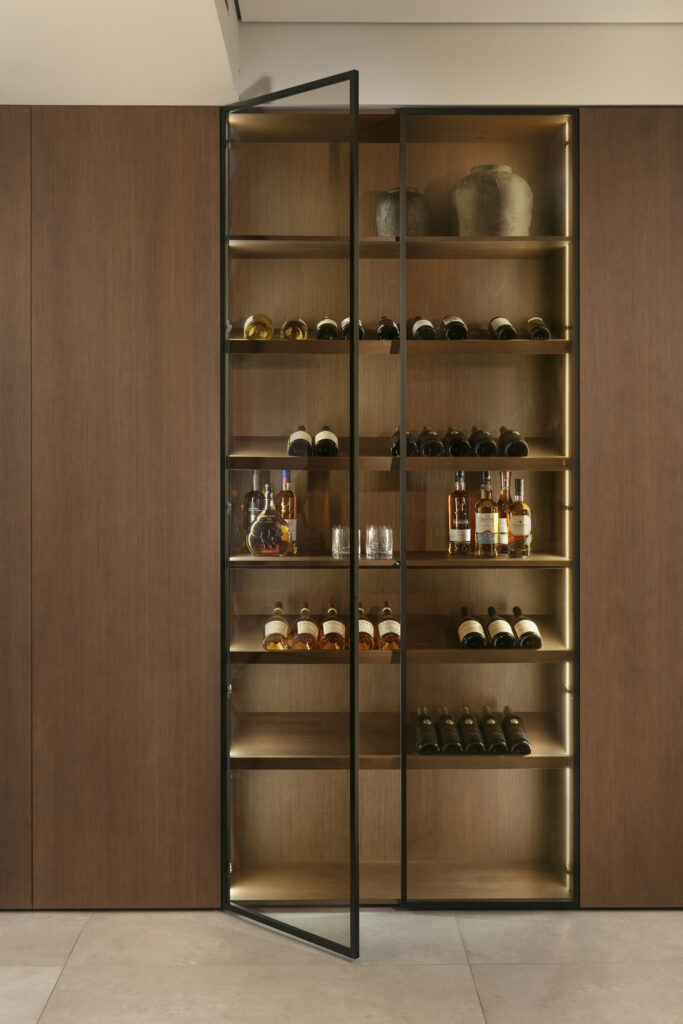
The unit continues naturally towards the kitchen, and in the transition between function and formality also incorporates open display shelves with glass fronts. This area is designated for drinks and hospitality utensils, and creates an additional layer of interest and materiality, while connecting the entrance area to the kitchen and hospitality space. The combination of closed joinery, hidden systems and transparent display sharpens the balance between practicality and elegance, a guiding principle that recurs throughout the design.

 The ceiling incorporated recessed lighting fixtures with a minimalist design, supplied by Shop Light. “The company knew how to incorporate recessed lighting profiles in the ceiling with a thin and precise finish, which were custom-made according to our design and vision. The company’s lighting specialist sat down with me in depth and professionally, along with the lighting plans I prepared for the project, and knew how to translate my desires and planning intentions into a precise lighting shade, suitable for each and every space,” explains Mor.
Decorative lighting fixtures with a sculptural appearance and rounded shapes were incorporated into the space, for example above the dining area, next to the staircase and near the TV sideboard. “Shop Light’s ability to accommodate ‘my craziness’, which is an integral part of the aspiration to create an interesting, precise and functional project, is what made the collaboration particularly successful and meaningful.”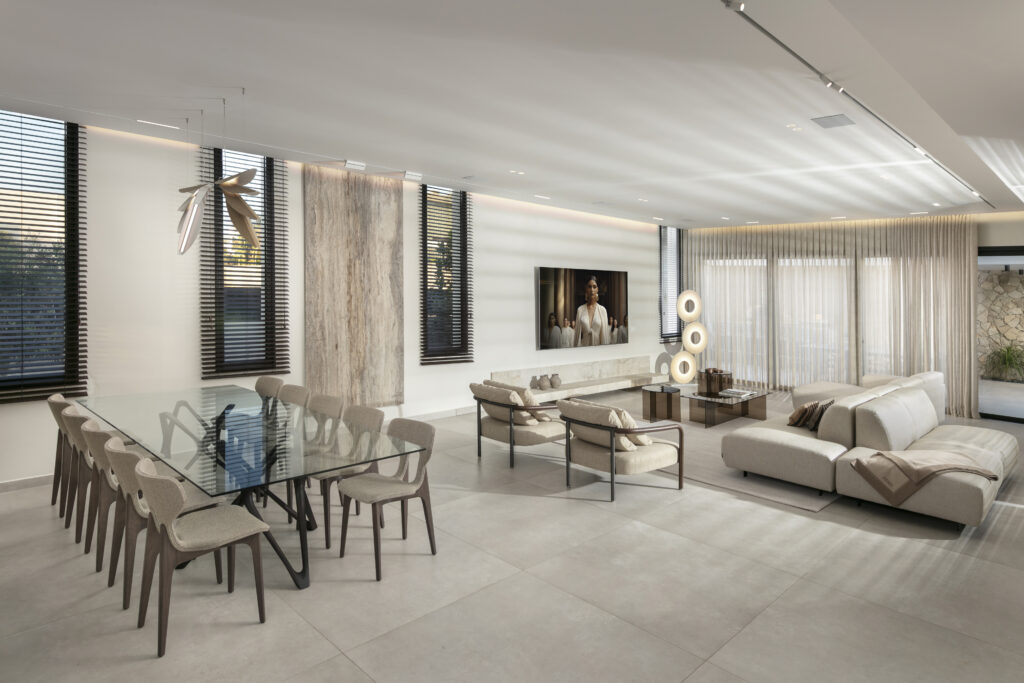
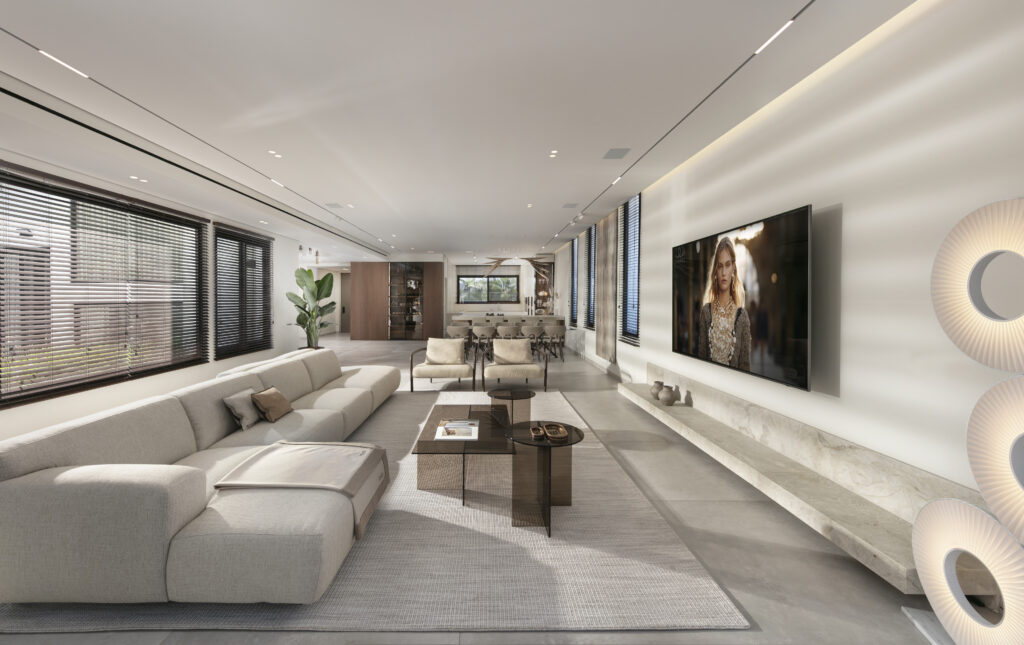
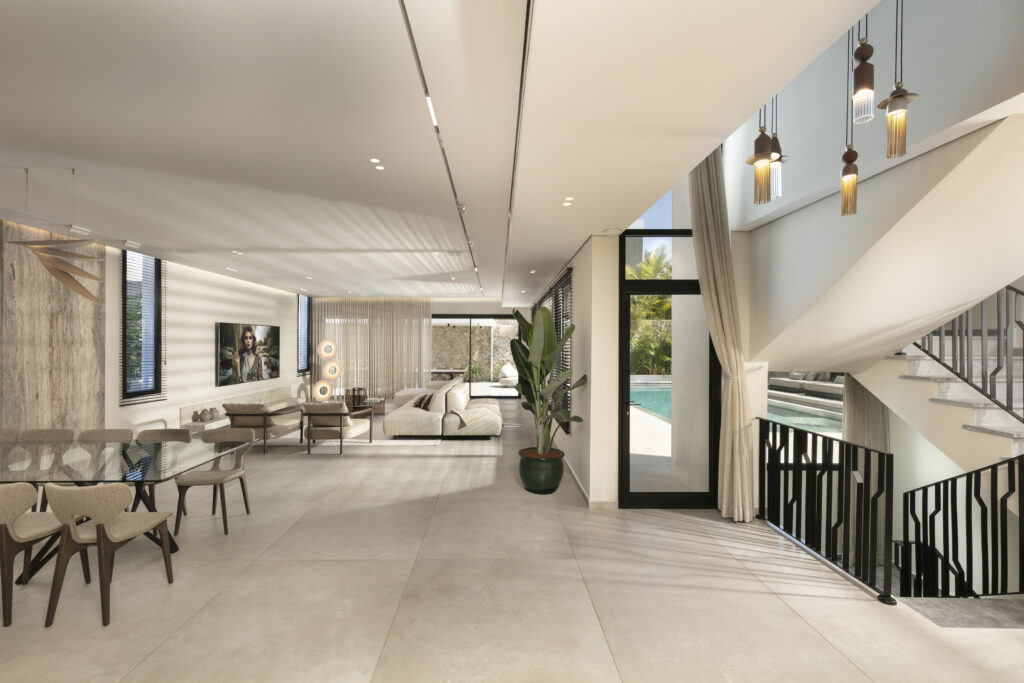
A large, two-way sofa was placed in the center of the living room space, which serves as an organizing element in the public space and allows for dynamic seating – facing the interior living room area or the garden and outdoors. The choice of a two-way sofa emphasizes the open design concept and the continuous connection between inside and outside, and encourages movement, entertaining, and relaxed, flowing daily use.
Natural marble from homeSegev CarmelIt was integrated into the public space in a refined, precise and effortless manner, adding a rich material layer of texture and warm tones. The marble does not appear as a dominant element alone, but is integrated as part of the overall language of the house, deepening the elegant and timeless feeling of the space. “They knew how to provide a professional response to every challenge that arose along the way – from the way the materials were hung to the final and precise level of finish of each element,” notes Mor, emphasizing the importance of meticulous execution alongside precise planning.
Below the TV screen, Mor designed a floating marble sideboard, a bold and contemporary interpretation of the classic sideboard element. “We consciously chose a heavy and presentable material, but applied it in a floating and light way, as an alternative to traditional carpentry,” she explains. The choice of marble as a functional and aesthetic response creates an interesting tension between mass and levitation, between heavy natural materiality and a sense of lightness and formal precision.
A large marble slab was placed between the living room and dining area, functioning as an artistic element in every sense of the word – a kind of sculptural image hanging in the space. Thoughtful cut-off details and a sophisticated hanging system create the illusion of a slab descending from the upper floor, in an image reminiscent of a waterfall frozen in time. “A dedicated and complex construction was required here, due to the heavy weight of the stone,” adds Moore, emphasizing the engineering complexity required to maintain a light, clean, and effortless appearance.
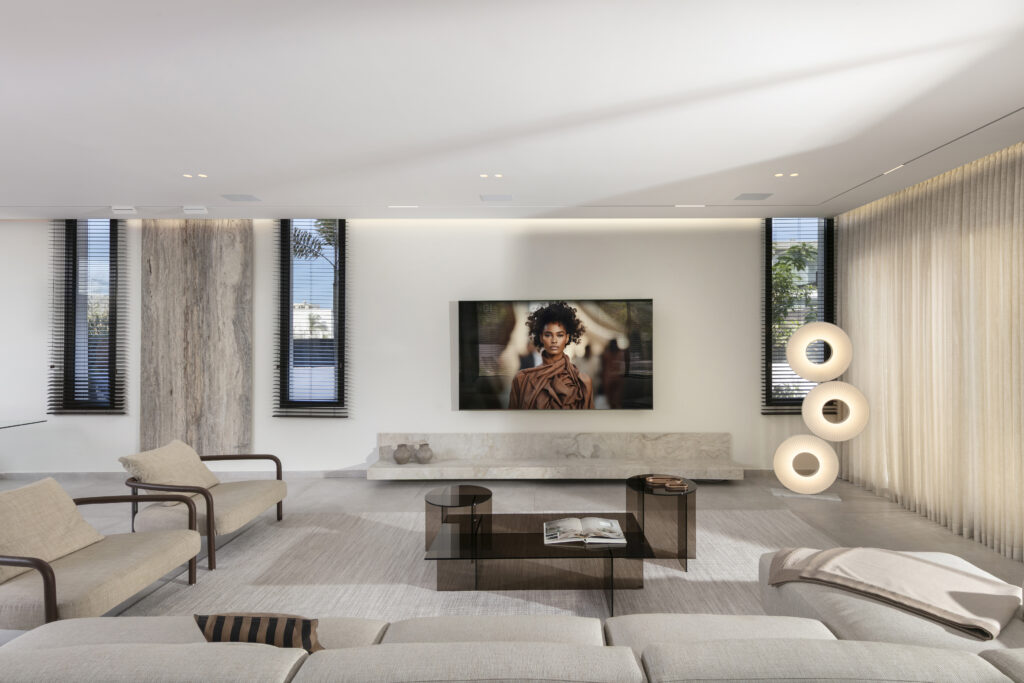
The combination of marble as an architectural, functional, and artistic element creates a harmonious whole in which material, texture, and design meet – and illustrates the approach of the entire project: a precise connection between nature and design, between power and restraint, and between aesthetic presence and daily living experience.
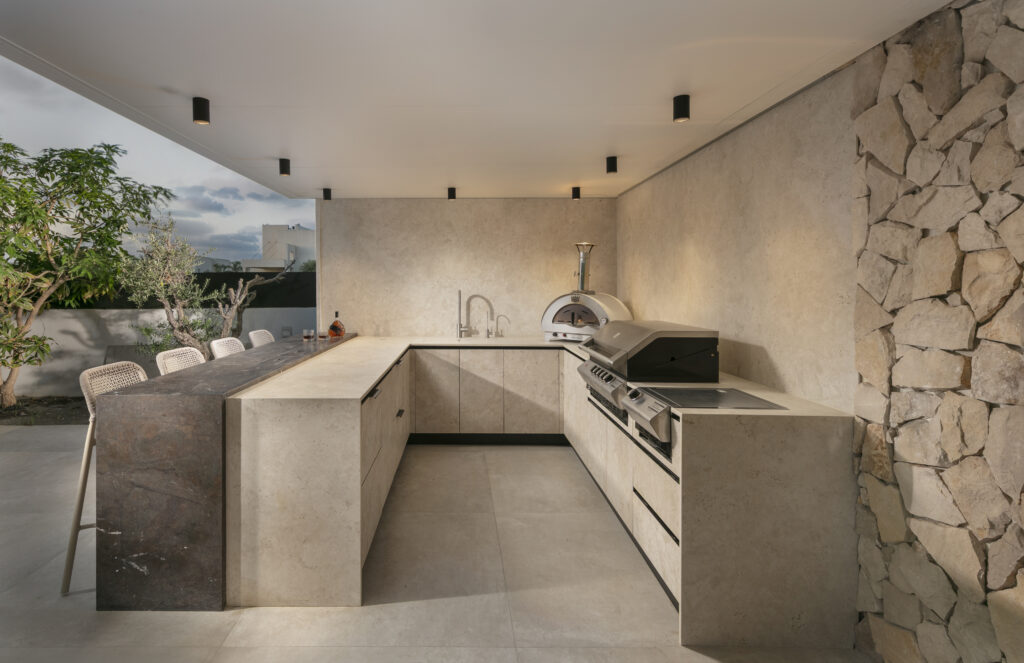
Segev Carmel, whose products were also incorporated into the bathrooms and public spaces of the house, was also responsible for the planning and execution of the impressive outdoor kitchen – “Together we designed an outdoor kitchen of the highest standard, including a hob, ice maker, cooking stove, beverage refrigerator, beer basin and a wide variety of other indulgent features, which significantly enhance the experience of hosting and staying outdoors. Beyond the operational and planning aspects, the installation team proved to be kind, patient and caring, with attention to the smallest details and a high standard of execution. Without a doubt, this is a safe and reliable address for marble surfaces and quality solutions for every space in the house.”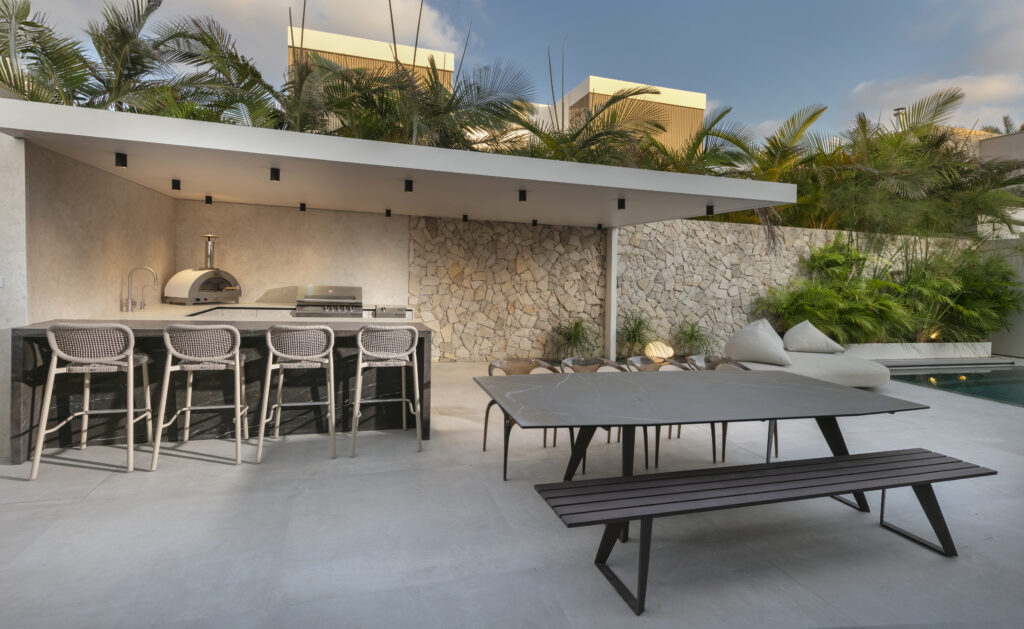
The contractor was responsible for carrying out the complex project and the entire renovation.Ilan Cohen, who accompanied the process from its beginning to the final finishing stage. In a project of this scope, where every design detail relies on precision in execution, the choice of contractor was no less a strategic move than the architectural choices themselves.
“In a project like this, the trick is to choose a professional who truly understands you,” explains Mor. “Not just in execution, but as someone who has a deep spatial understanding, a systemic vision, and a real desire to get down to the small details – the ones that ultimately create a great project.” According to her, Cohen accompanied the project throughout with a full commitment to understanding the planning in depth, dealing with the engineering and execution challenges, and implementing every decision in the most precise, professional, and cleanest way. In this way, he succeeded in translating the architectural vision into a built, meticulous, and presentable reality.
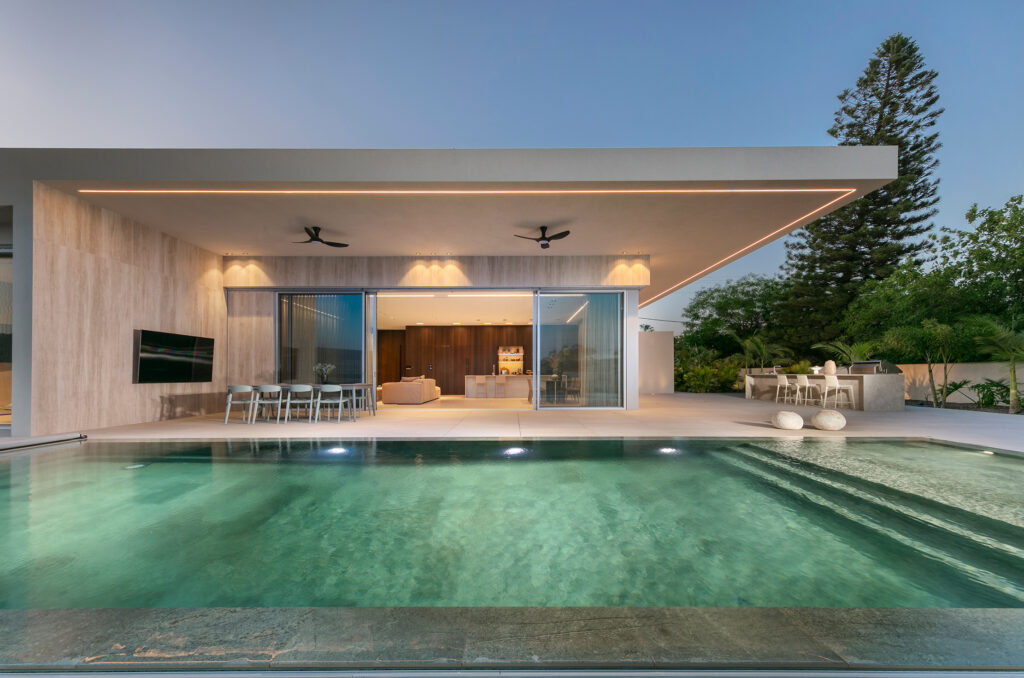
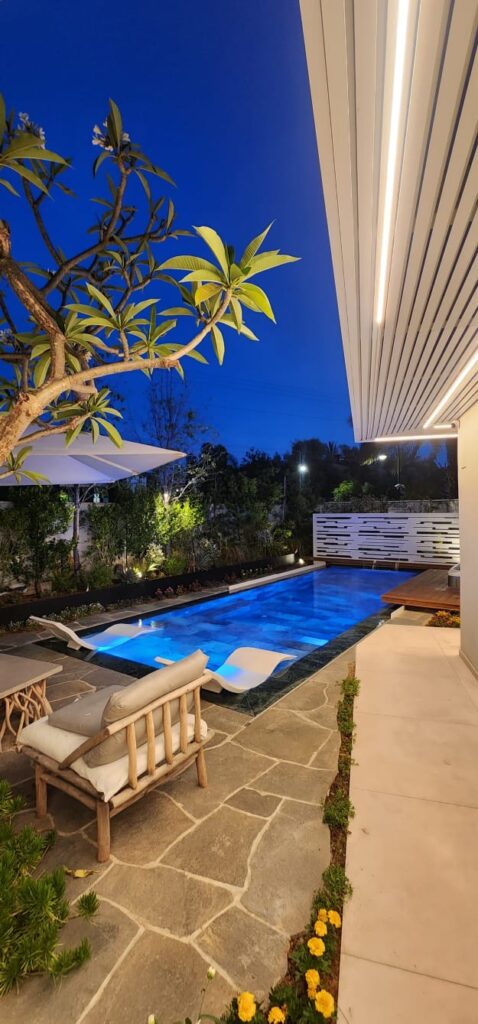
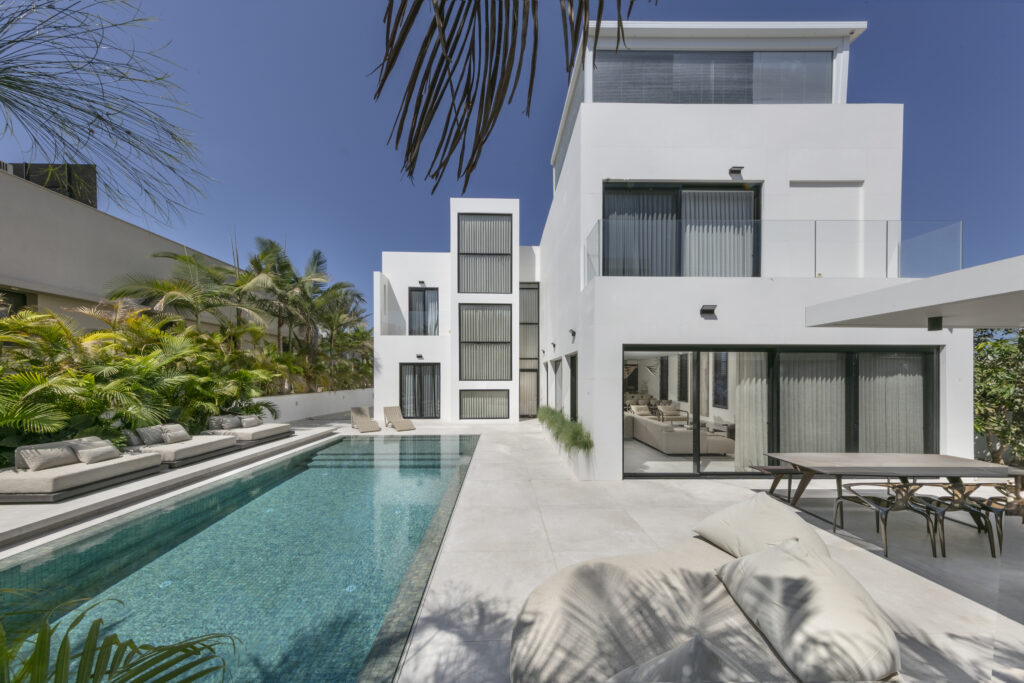
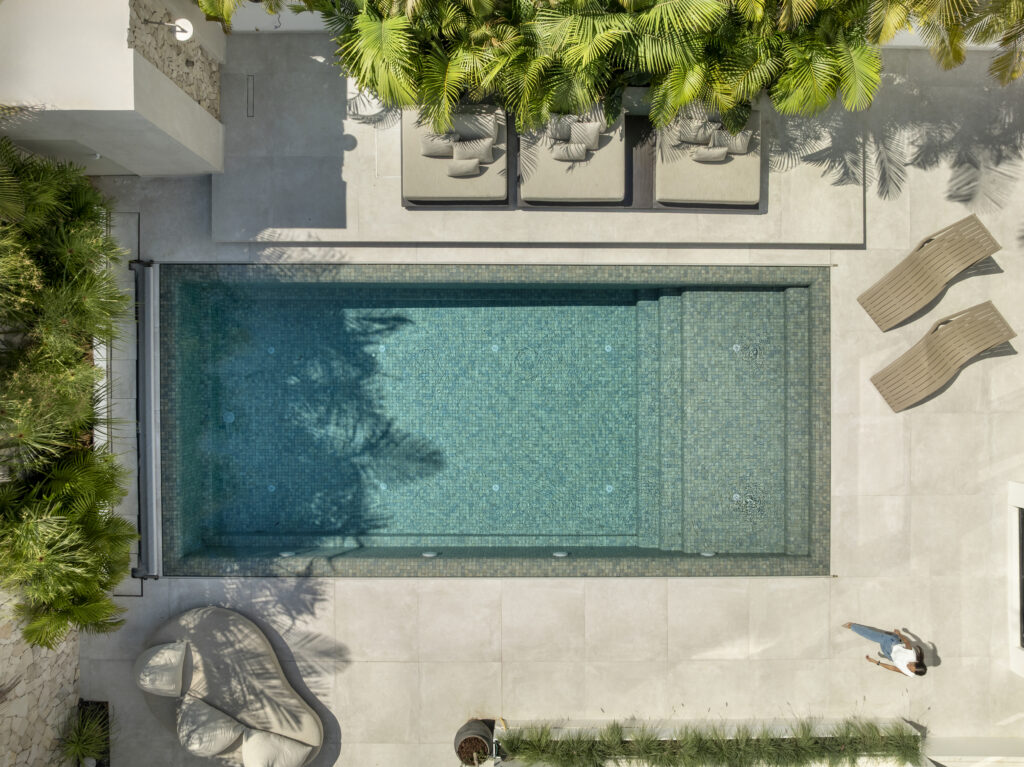
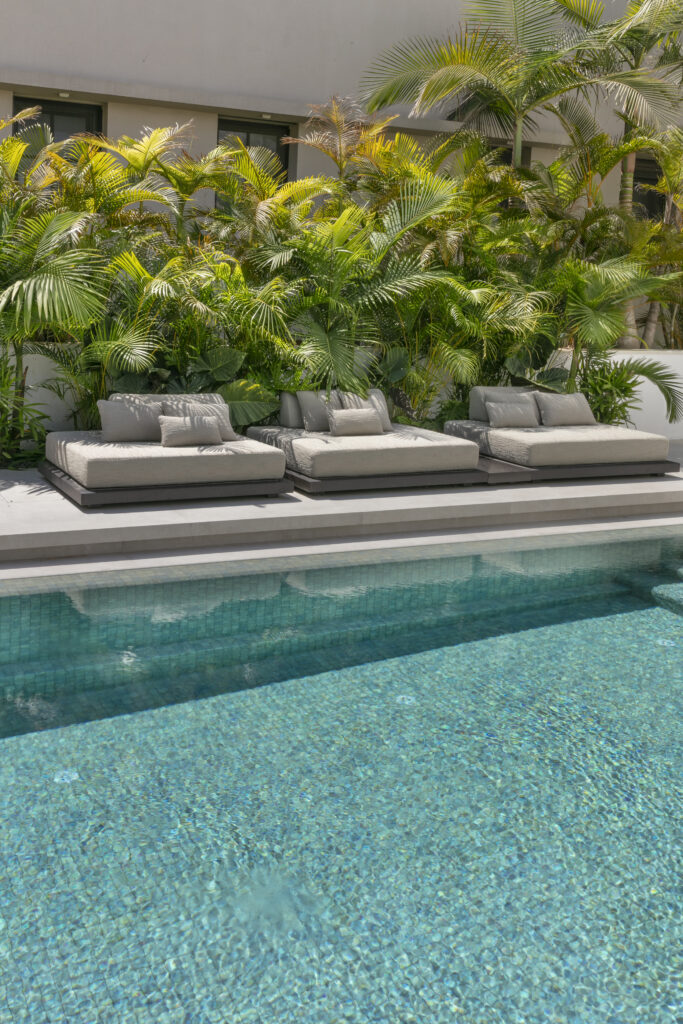
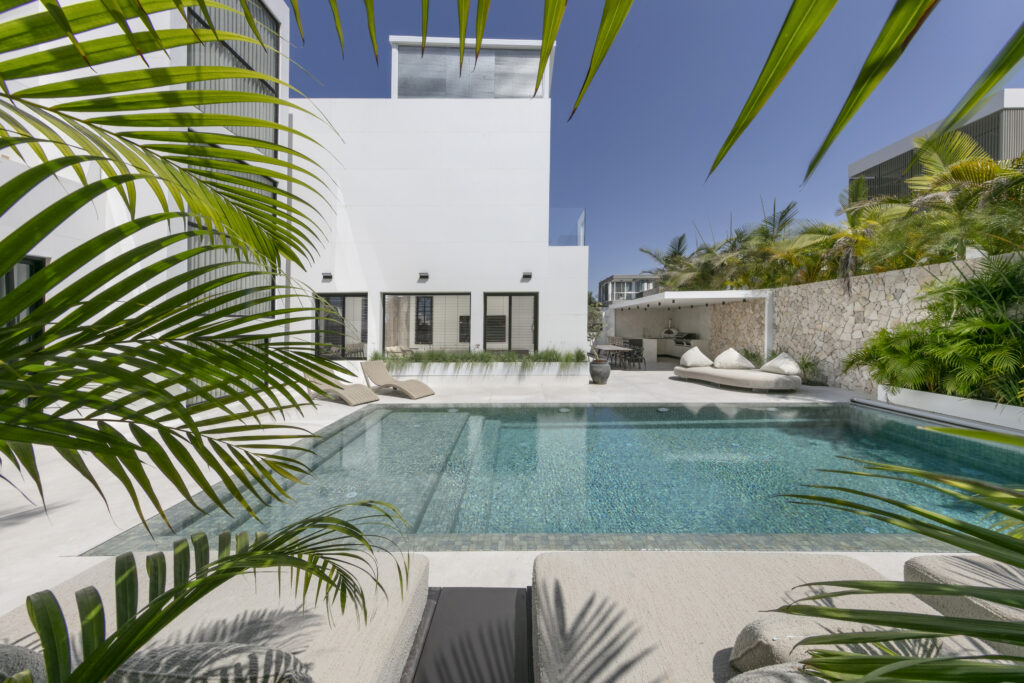
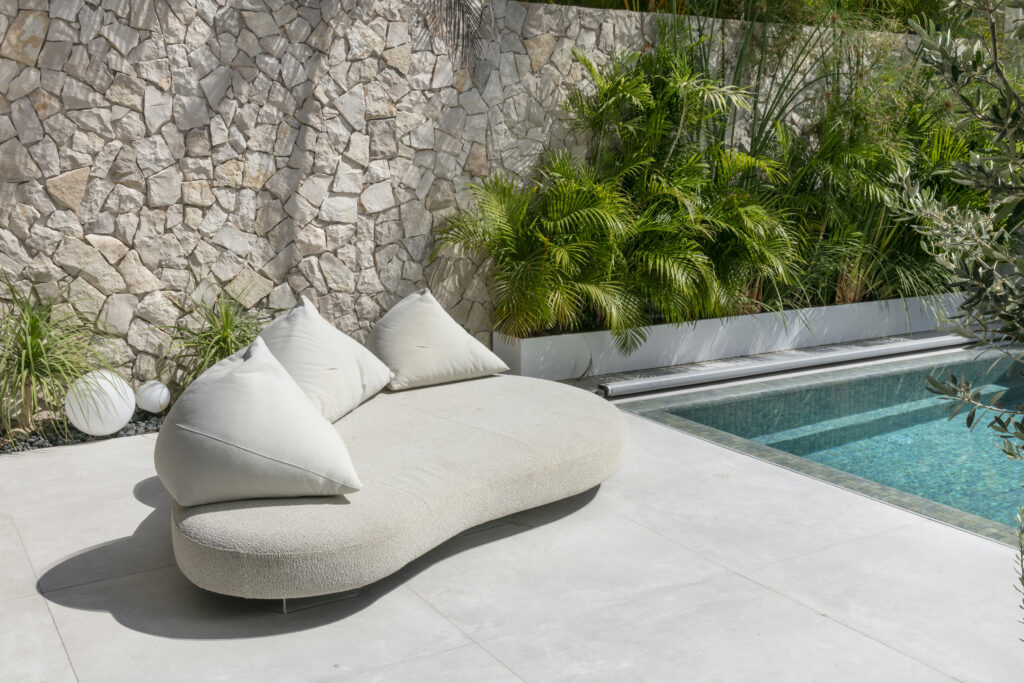
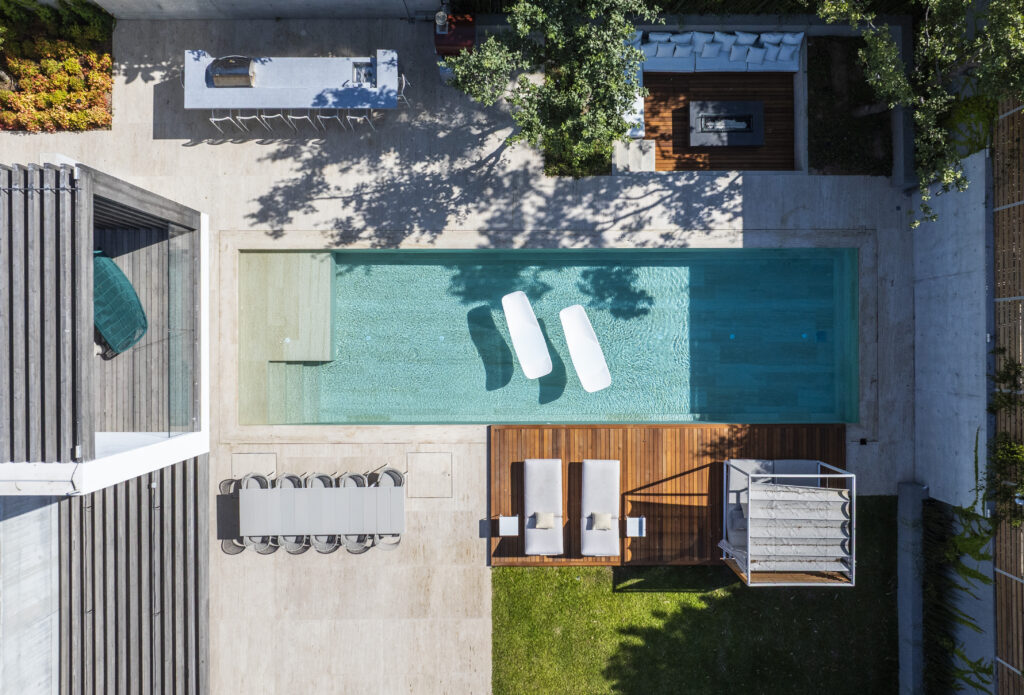
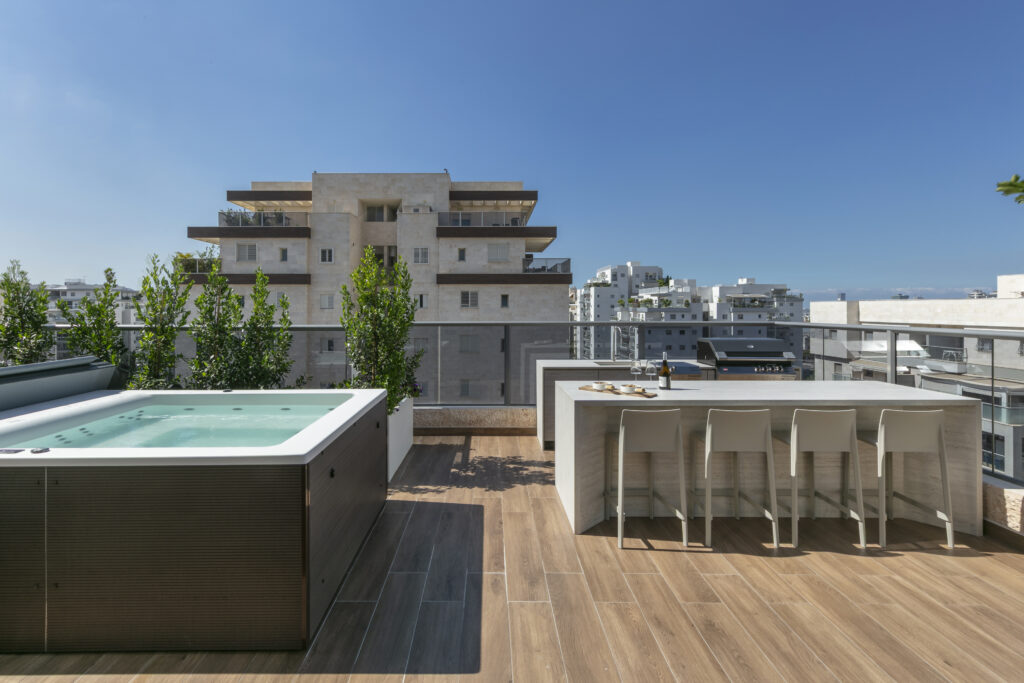
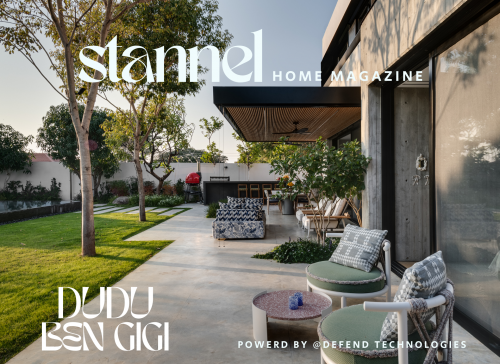
The outdoor areas of the house, which extend over approximately 200 square meters, are a direct continuation of the architectural language of the interior and were designed as an integral part of the living experience. The planning division is clear but soft, allowing for diverse uses throughout the day and the seasons. The area is divided into two central areas: a hospitality area that includes an outdoor kitchen and a generous dining area, designed for family gatherings and large entertaining; and next to it, a more intimate lounging area, raised above the pool, with low sofas that invite lingering, resting, and watching the landscape and water.
“Each area gives a different feeling,” explains Moore, “but together they create a single experiential continuum – one that allows for a transition between dynamism and intimacy, between active hospitality and relaxation.” The choice of levels, proportions, and the way the furniture is positioned strengthens the connection between the house and the garden, and emphasizes the overall concept of the project: a house that lives the outside no less than the inside, and offers a complete, flowing, and precise quality of life.
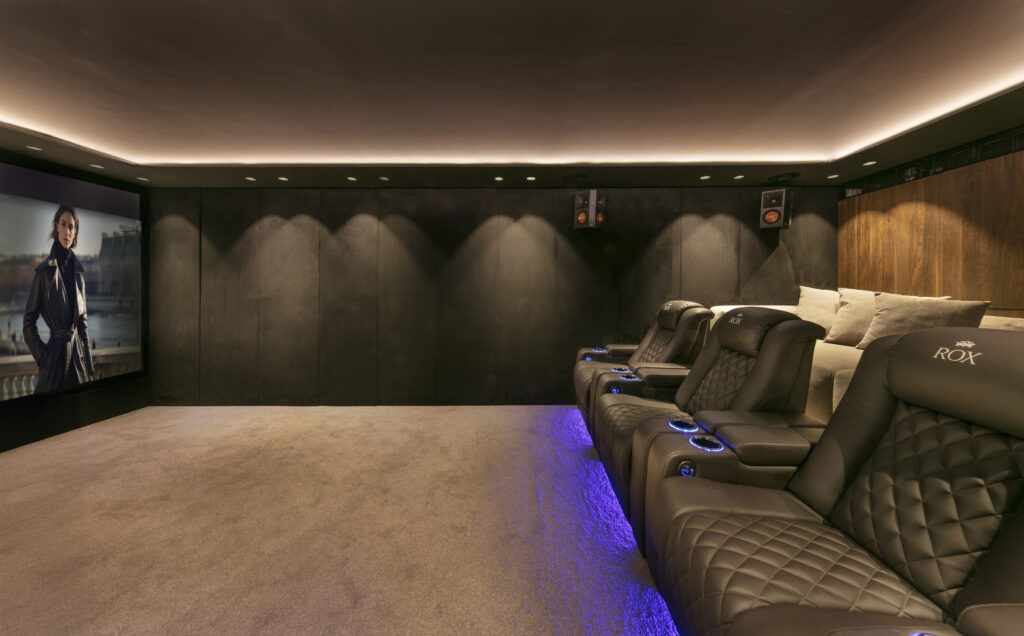
Mor used the basement floor to create a dedicated experiential space, and designed a home theater room equipped to a high standard. The design and construction of the theater room were carried out by the companyOR&T, working closely with the designer and according to the precise requirements of the residents. The collaboration included integrated thinking on design, acoustics and technology, with the aim of creating a space that is both functional and aesthetic.
The result is a private cinema room that provides the homeowners with an immersive, high-quality viewing experience of the highest level. The space includes luxurious sofas, a professional projector integrated with custom-designed joinery, and an advanced surround sound system that includes 11 speakers. Some of the speakers have been cleverly hidden behind the screen and in other architectural elements, so that the technology is integrated into the design and does not detract from the visual cleanliness of the space.
The significant advantage of OR&T, Moore points out, is that they areone-stop-shop: One entity that provides a comprehensive solution – from the concept and planning stage, through precise acoustic solutions to full implementation customized to the space and design. This process allows for complete control over details, perfect coordination between all systems, and a final result that succeeds in integrating an advanced technological experience within a harmonious and quiet architectural language.
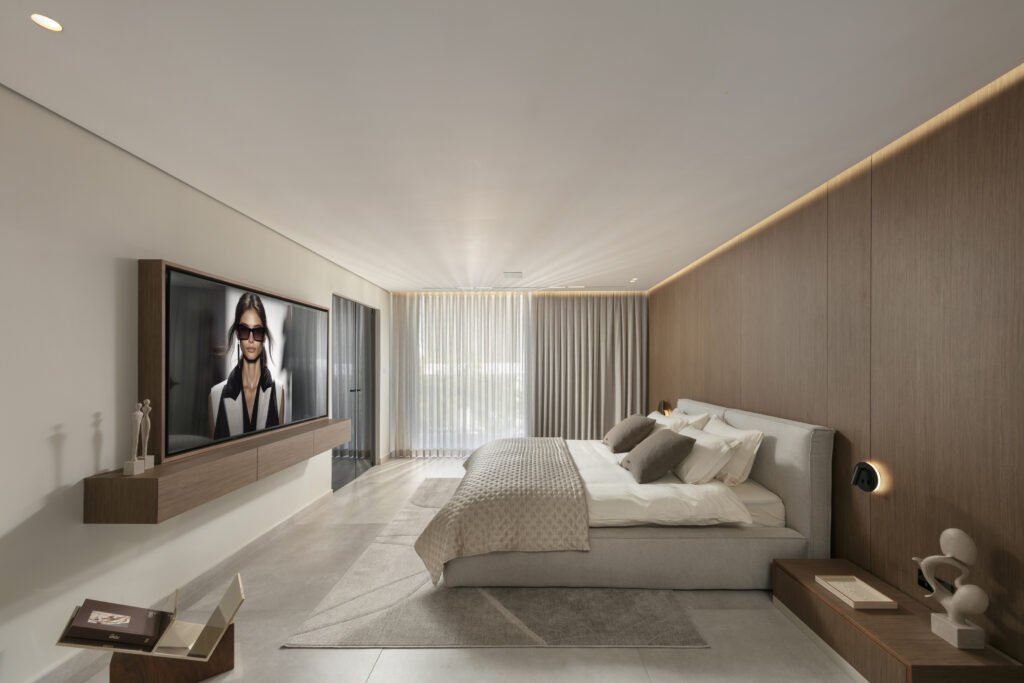

Planning and Design | Architect Mor Zuaretz
Photography | Elad Gonen About the firm | Mor Zuaretz Architecture and Interior Design
The firm was established in 2018, upon completion of his undergraduate studies, out of a desire to create a personal, precise and profound architectural language. Since then, the firm has been involved in the planning and design of private homes, luxury homes and offices, while adhering to a high design standard and combining meticulous functional thinking with a sensitive and personal design approach.
The work is characterized by a constant search for a precise balance between aesthetics, functionality and a sense of home. The style is born from a deep listening to the client and the space, and is expressed in restrained minimalism, clean lines, a conscious choice of materials and a quiet elegance – one that does not depend on passing trends, but stands the test of time.
What drives the planning process is the understanding that a good home is first and foremost an experience: an experience of proper flow between spaces, of precise proportions, of natural light, and of a harmonious connection between materials, colors, and details. Every planning decision is made with deep thought about the client’s lifestyle – how the home will function on a daily basis, how it will feel over the years, and how it will accompany the household members in both routine and entertaining.
The work process is based on precise and uncompromising planning, attention to the smallest details, and full cooperation with the client and all suppliers throughout the process. The emphasis is placed on professionalism, transparency, and adherence to quality, based on the belief that precision in planning and personal attention are the keys to creating a home that is not only beautiful, but also true, pleasant, and truly tailored to the person who lives in it.
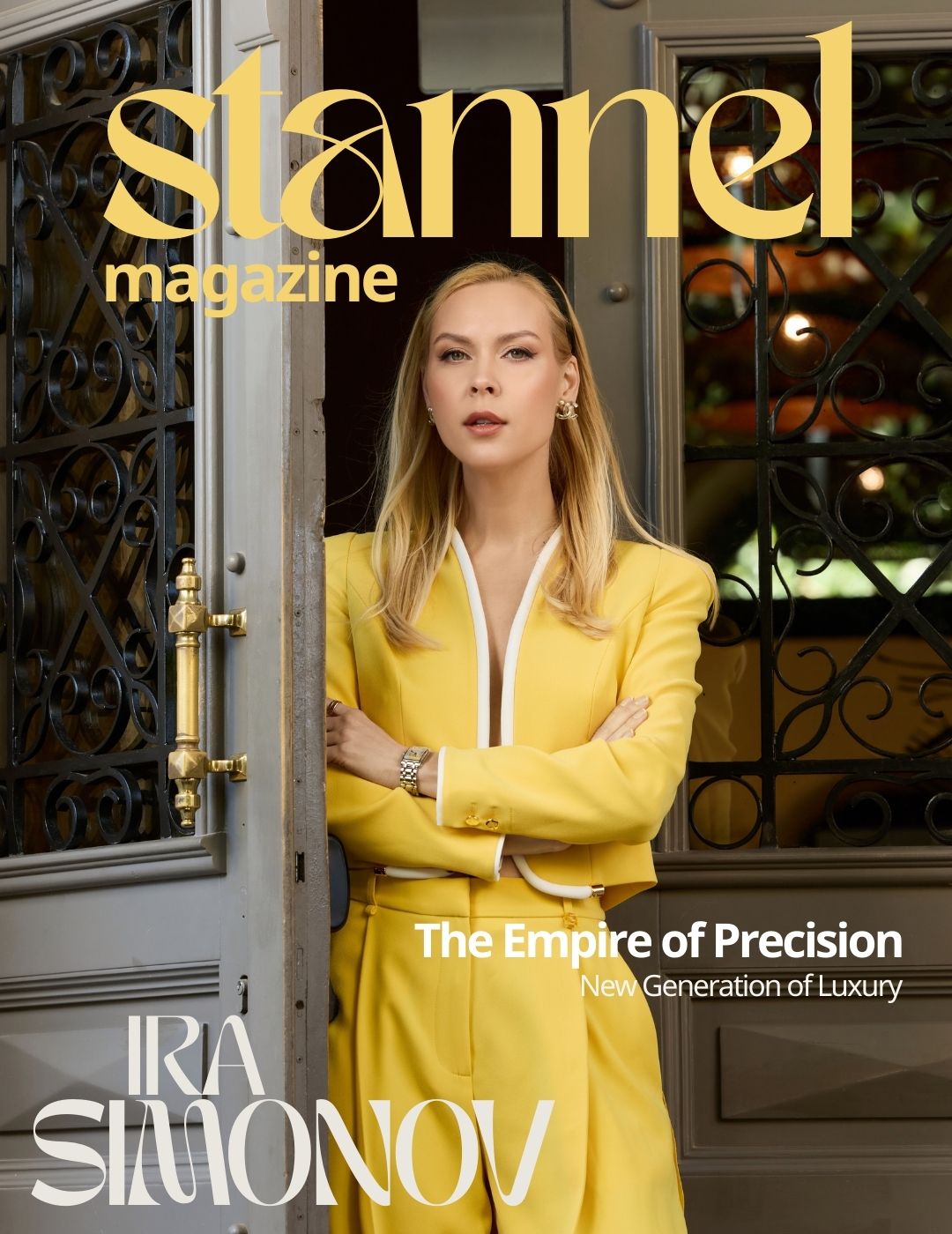
In an era where anyone can define themselves as a content creator, the term “lifestyle” has sometimes become empty of meaning.But for Ira Simonov, one of the most prominent and influential lifestyle influencers in Israel, it’s a coherent and clear concept of life. Not aesthetics for aesthetics’ sake, not exposure for exposure’s sake, but a […]


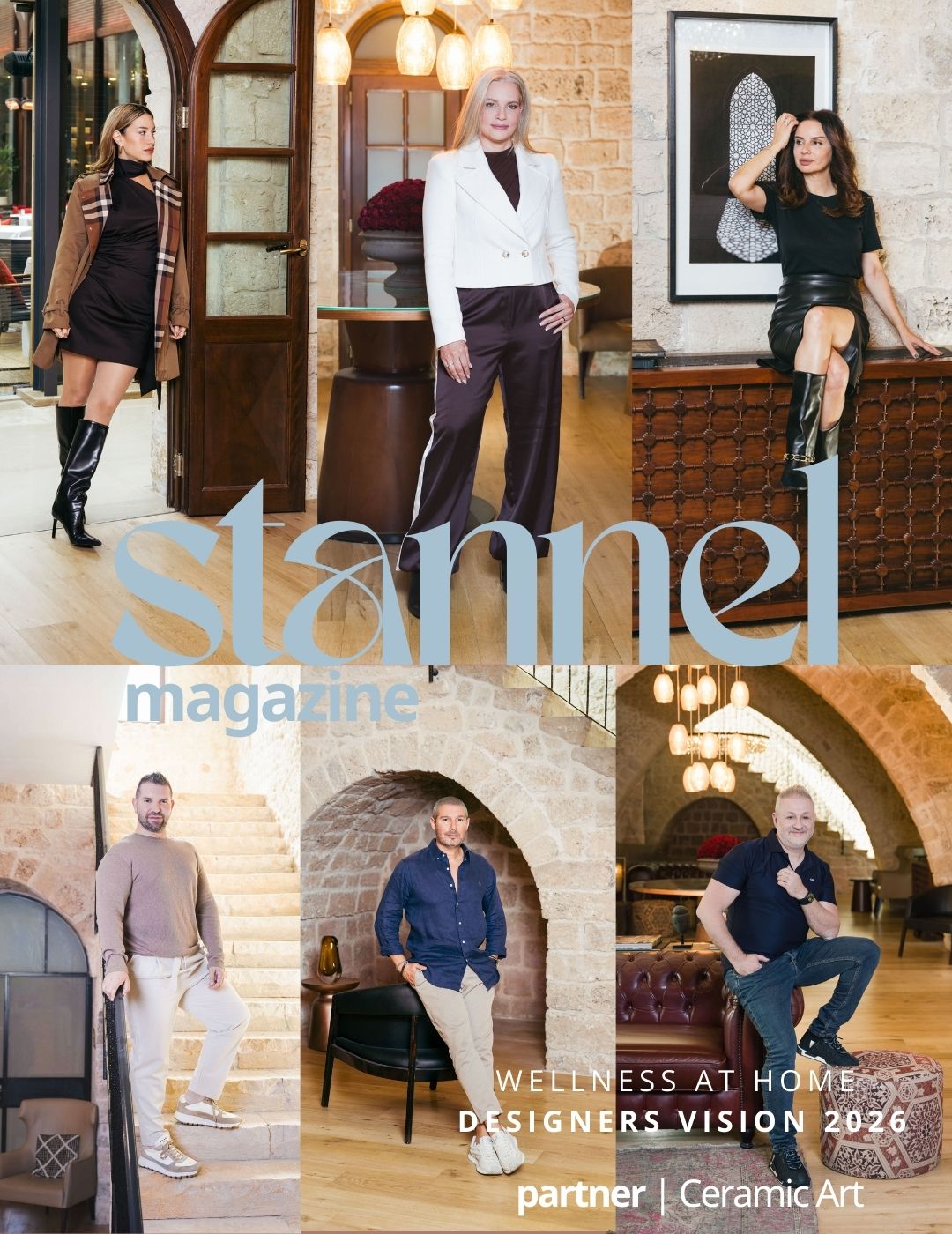
In recent years, the world of wellness has undergone a profound transformation.What began as a concept related to fitness, nutrition, or exotic retreats has become a broad concept that defines an entire lifestyle. Wellness is no longer a one-time action, but a system of daily decisions aimed at improving the quality of life, reducing mental […]
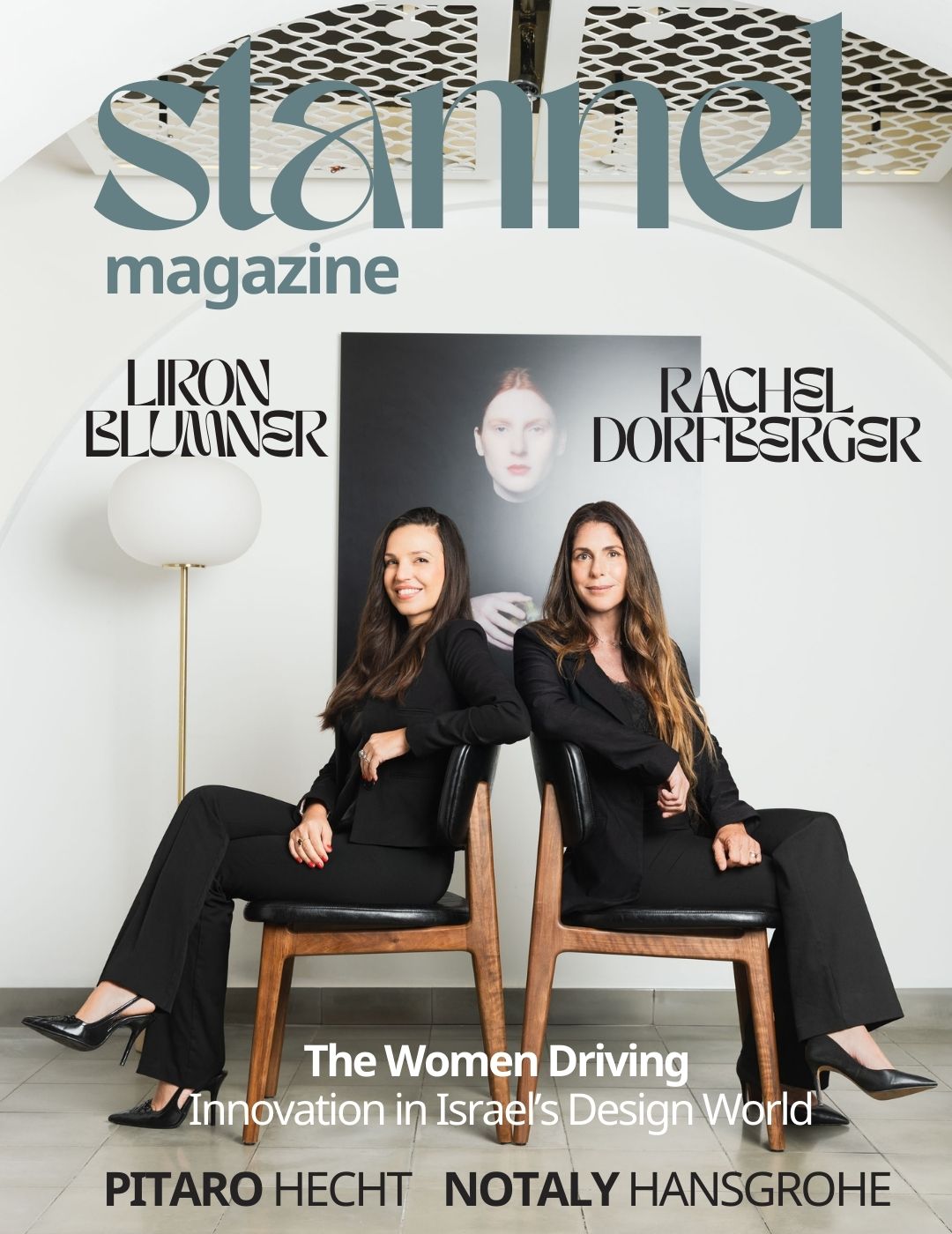
Women’s Day is a great reminder to look not only at the result, but also at those who are leading the way to it.In the design industry in Israel, this is felt at every stage: in the studio, on the ground, in the showrooms, and also behind the scenes, with the women who connect an […]
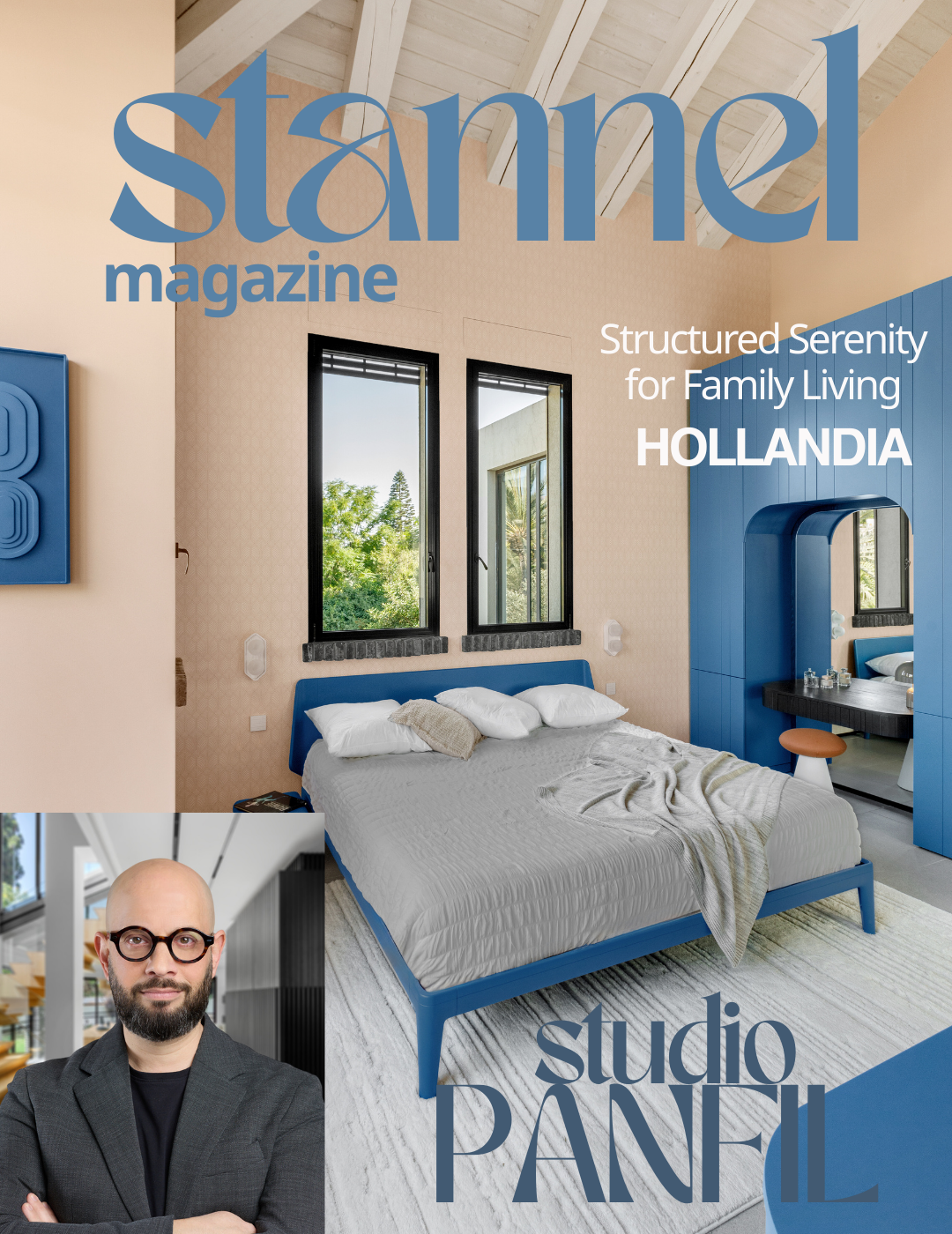
There are houses where you can recognize their potential at first glance, even if in reality they are still far from serving the people who live in them. Such was the case with this house, which was redesigned by an interior designer.Tuvia Panfil, founder of Studio PANFILThis is a private house in Ramat Gan, about […]
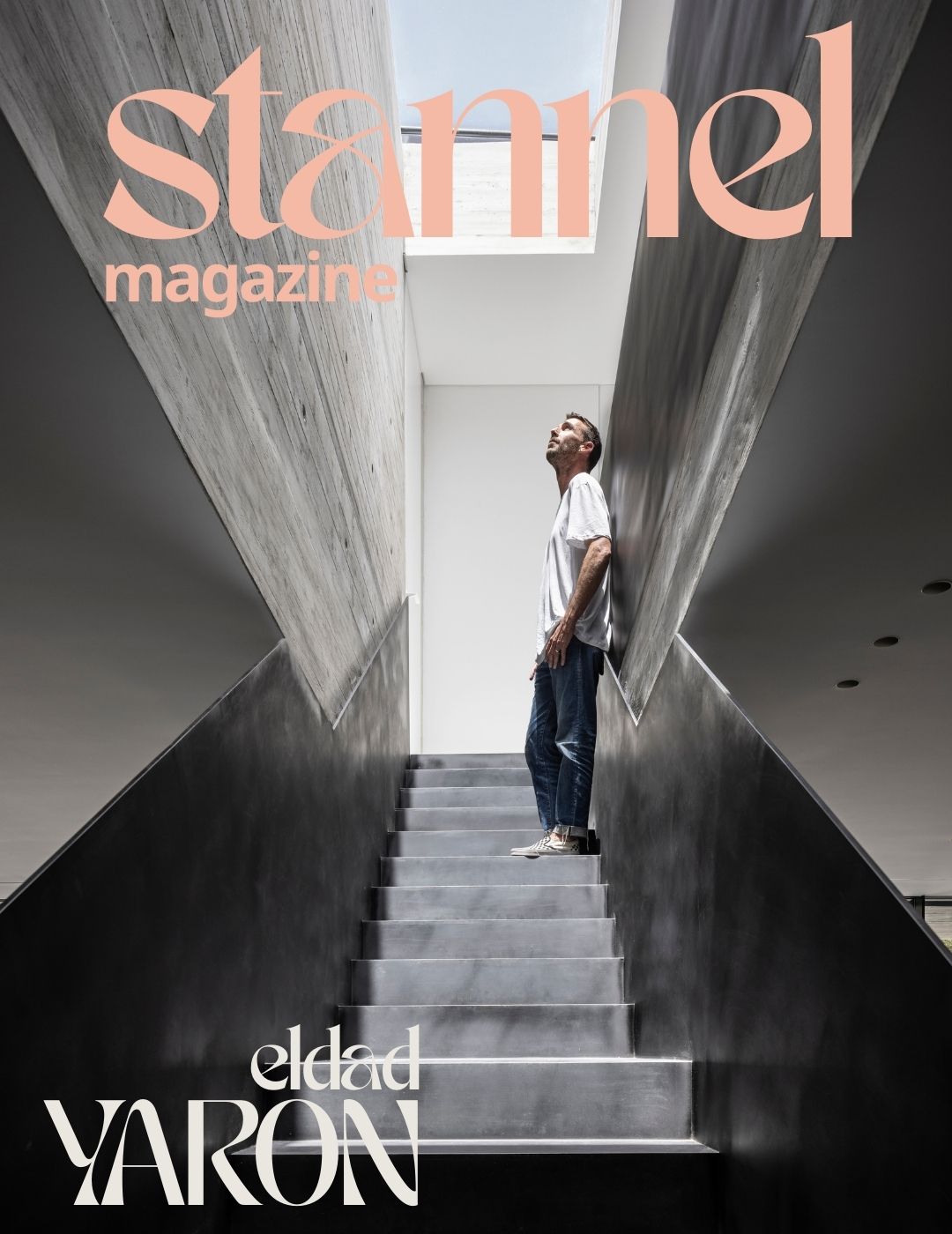
The house designed by architect Yaron Eldad, together with architectural engineer Noy Sandgarten from his office, for a family of six, relies on a clear and coherent language that he defines as warm industrial modern. This is a project that begins with a distinct concept, one that dictates the planning of the building and its […]
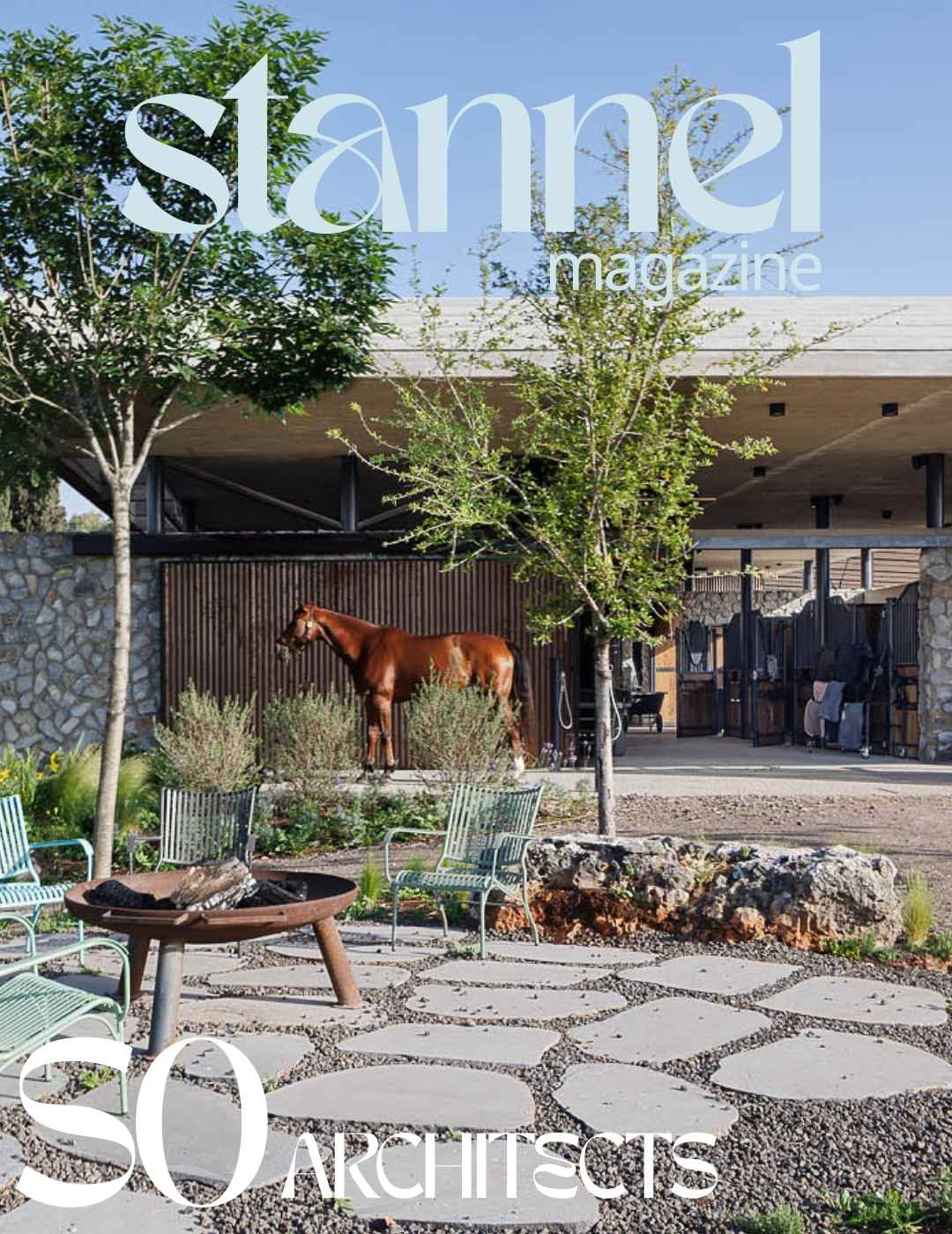
A project that connects two dreams and two adjacent plots of land in Yokneam Moshava, which share planning and value concepts.Shahar Lulav, owner and partner at the firmSO ArchitectsAlongside Oded Rosenkiar, he was entrusted with the planning of the project, along with architects Eyal Shahar, Nir Taub and Yuval Feiglin from the firm’s team. They […]
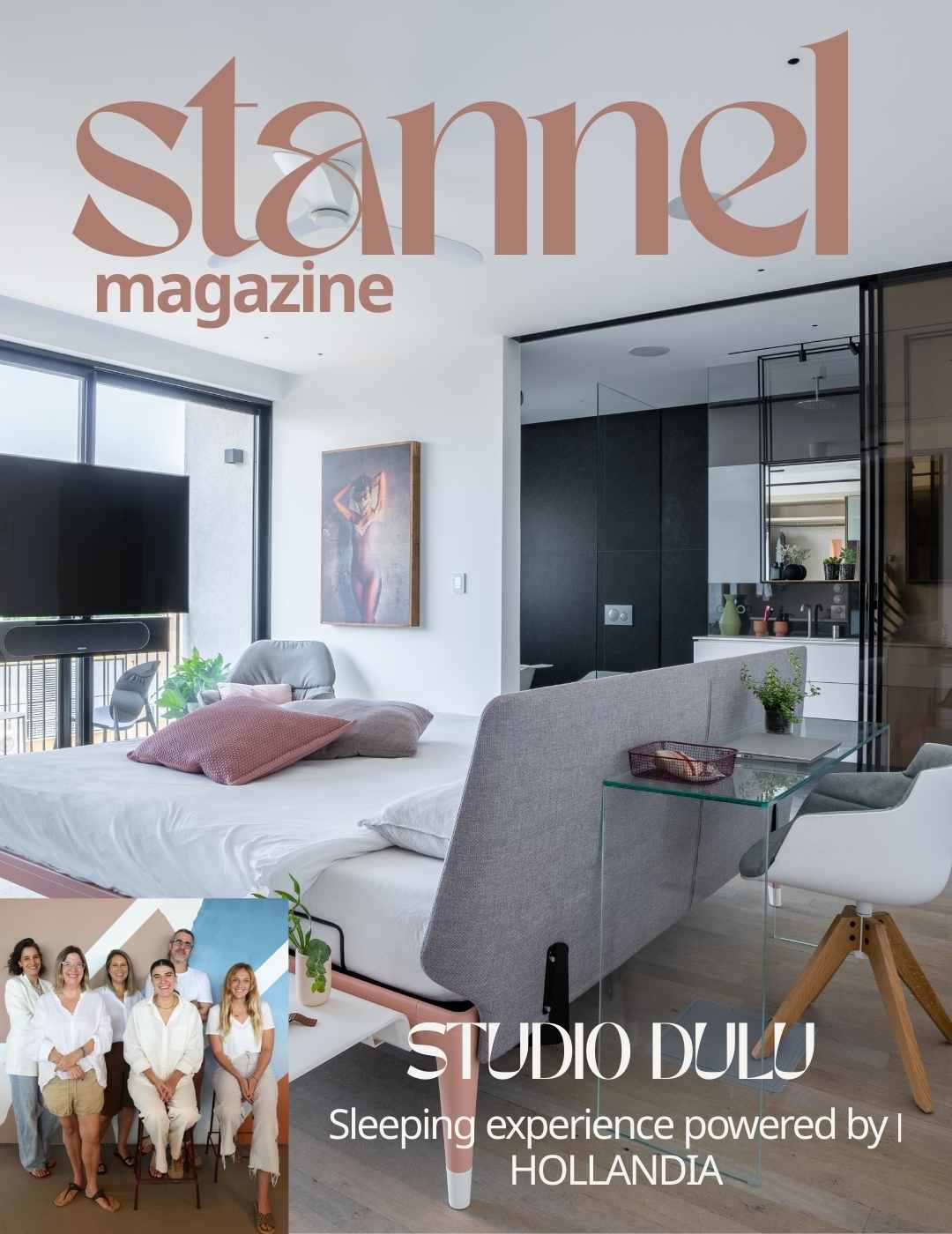
A tall Tel Aviv tower or an old neighborhood with character? For this family, the question was not geographical at all, but essential. They wanted to live the city, not observe it from the sidelines. To be a part of it, but not be swallowed up by its rhythm. The choice of an apartment in […]
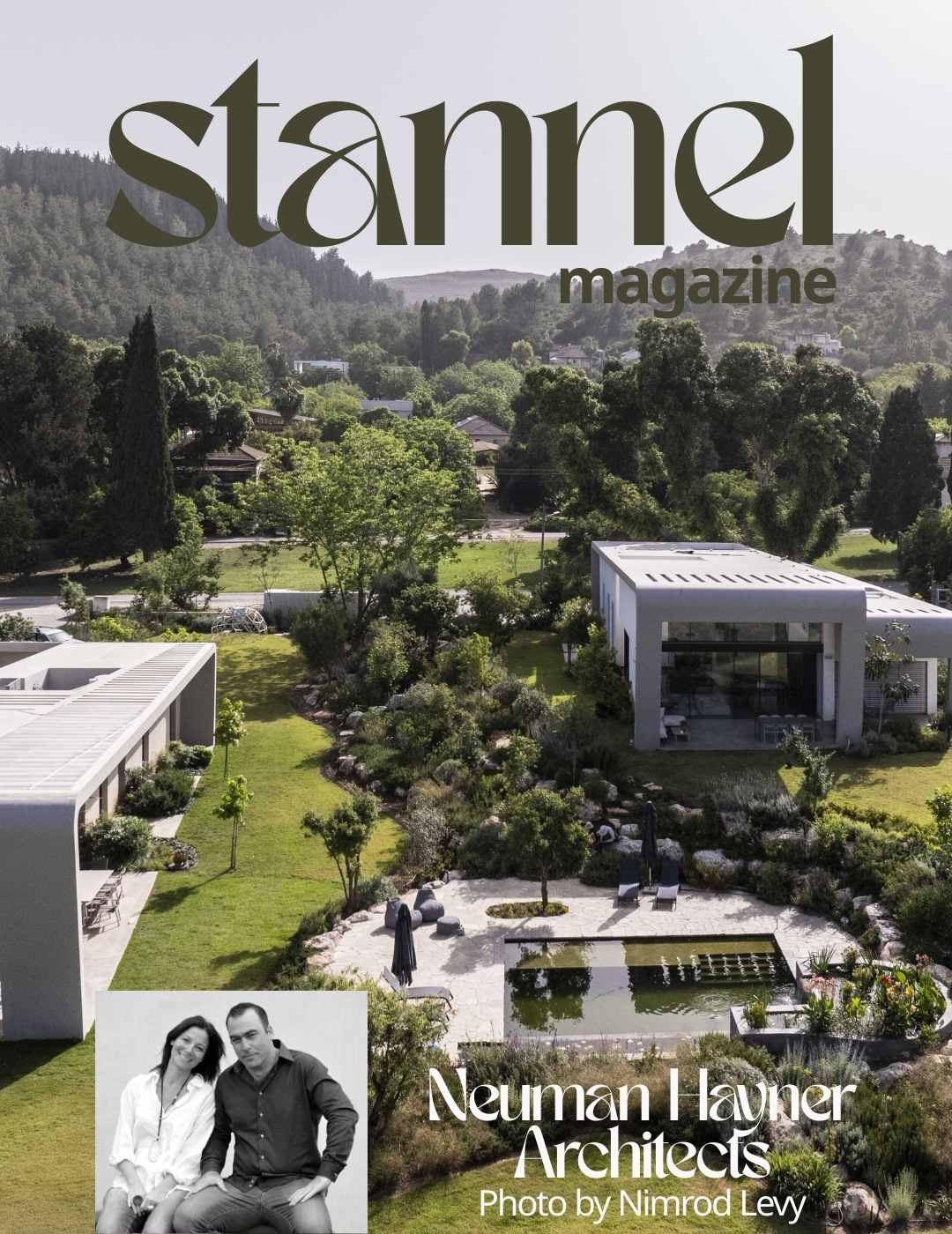
Neumann-Heiner Architects, led by architects Sharon Neuman and Yiftach Hainer, is among the most diverse we have encountered on the Israeli landscape. They design buildings and spaces of all sizes and types – public buildings, hotels, visitor centers and museums, residential buildings, office buildings, commercial spaces, urban renewal, building preservation, offices, restaurants, private homes and […]
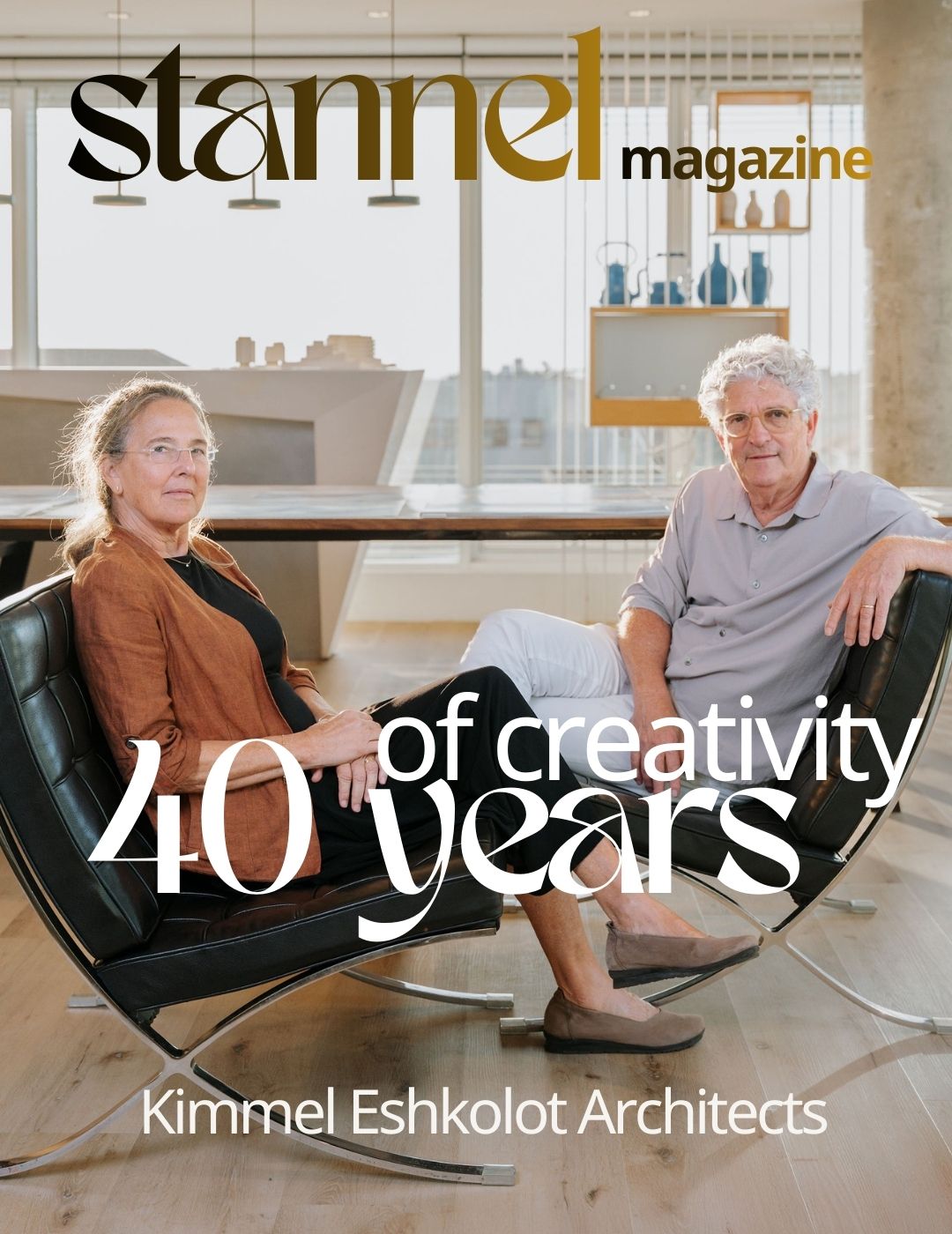
The Kimmel Eshkolot architectural firm, founded by Eitan Kimmel and Michal Kimmel-Eshkolot, is celebrating 40 years of extensive activity in the fields of architecture and design in Israel and abroad this year. A pop-up exhibition that opened last week somewhat summed up their journey, but according to them, they are always looking ahead, towards the […]
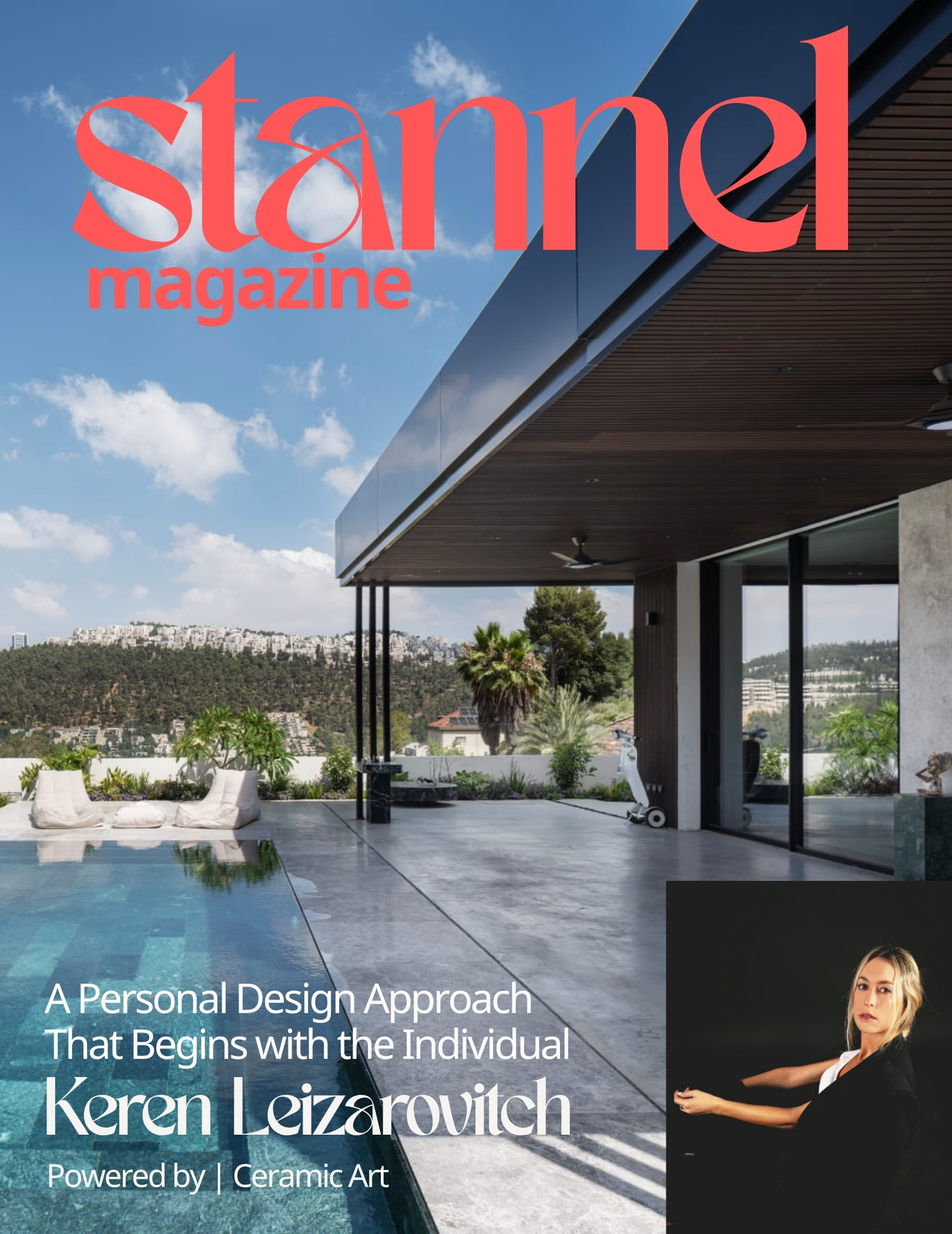
With patience, listening, and dedication, you sewArchitect Keren LizarowitzA unique project for each client, family or business. She believes in a dialogue between the client and the architect, based on cooperation and mutual trust, and in the end a house is born that lasts for years, distinguishes between trend and classic and dares in the […]
A special and intriguing renovation of a penthouse apartment in a preserved Tel Aviv building, which was converted from a vacation apartment into a spacious living and hospitality space inspired by Jaffa and the White City, alongside a gorgeous roof that was planned and designed as an urban garden in every sense. “The client is […]
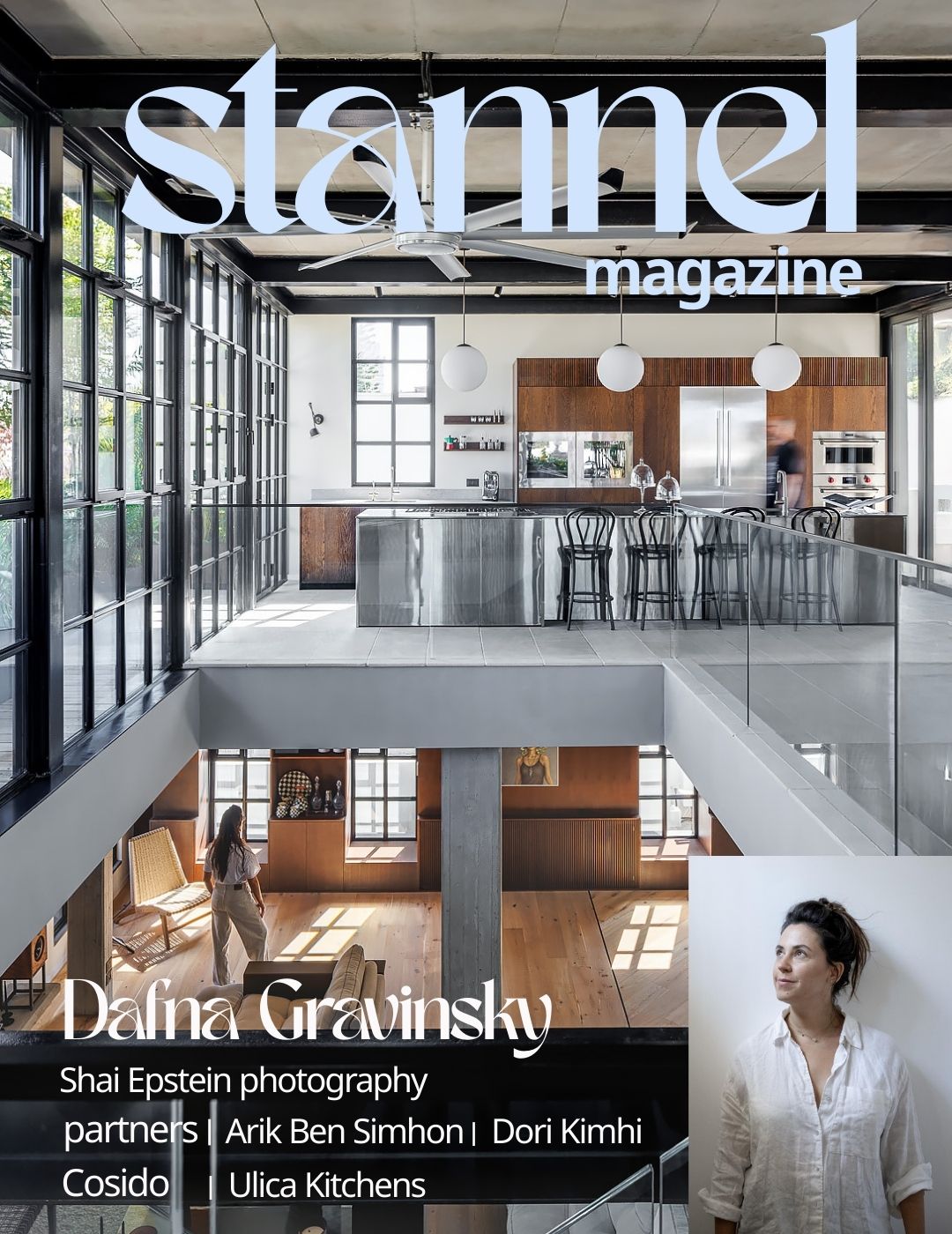
A couple and their three teenage sons purchased a house on a quiet street in north Tel Aviv and turned to interior designer Dafna Lia Grabinsky to renovate the house. In its original state, the house was stiff and rough, and they wanted to adapt it to their lifestyle and the values they brought with […]
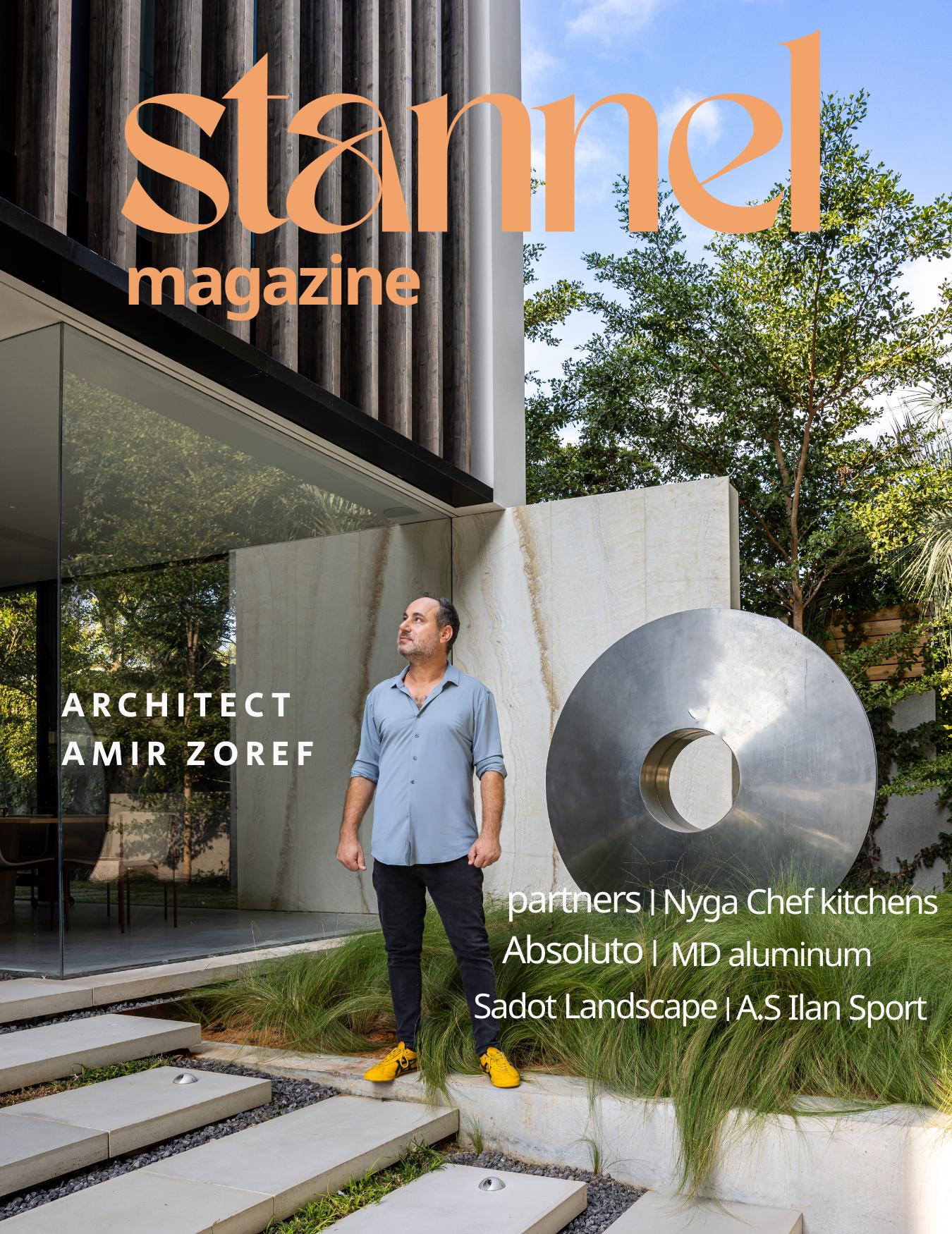
A house in Herzliya Pituach, built for a family of six on a dunam-sized plot of land.The existing house was demolished and a 600-square-meter house was built in its place, spanning three levels. “For the family, which was expanding in advanced planning stages, it was important to create a large and spacious living space that […]


600 SQM
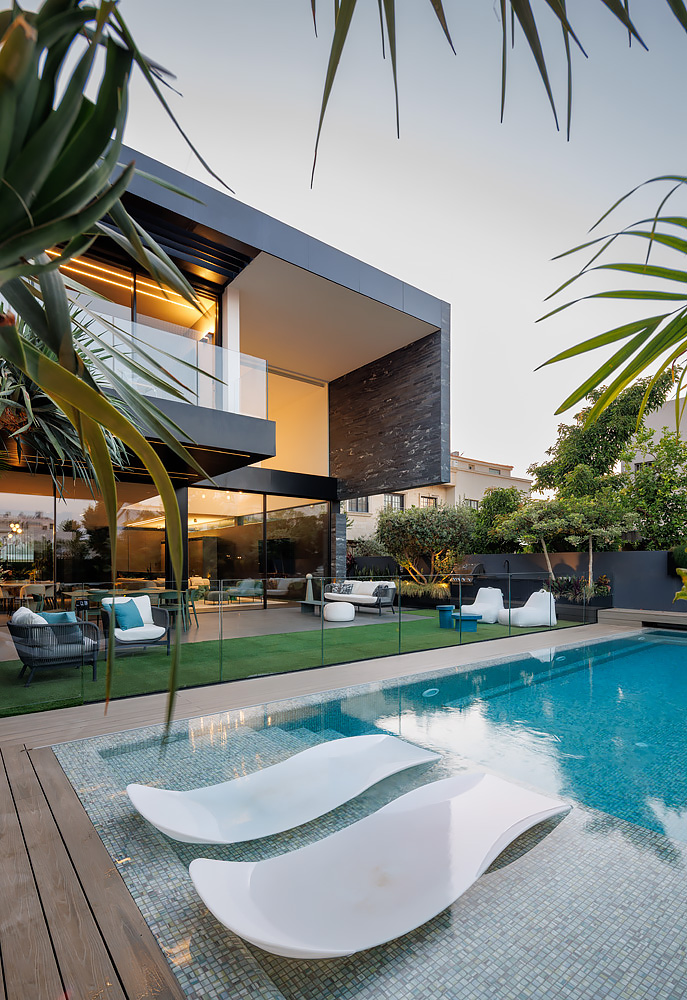
From every angle and every view, this house is impressive and meticulous.And so it is perhaps even more surprising to discover that its opening details were far from exciting – “A rectangular plot of half a dunam, in a quiet and monotonous neighborhood; a semi-detached house, without a special view and without much sun,” says […]
450 SQM
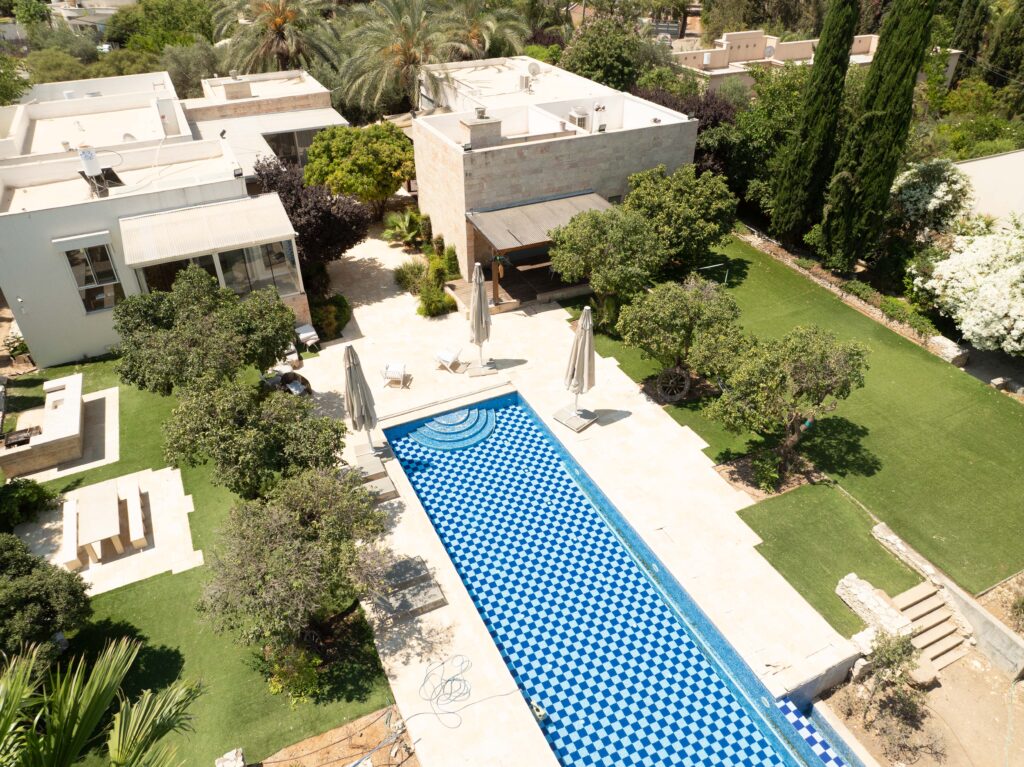
Renovating a house in a moshav in central IsraelFor a senior couple whose four children have grown up and started families. “This house is the dream of every extended Israeli family. It is the center of life for all the children and grandchildren and serves as a place for everyone to spend time together. It […]

360 SQM
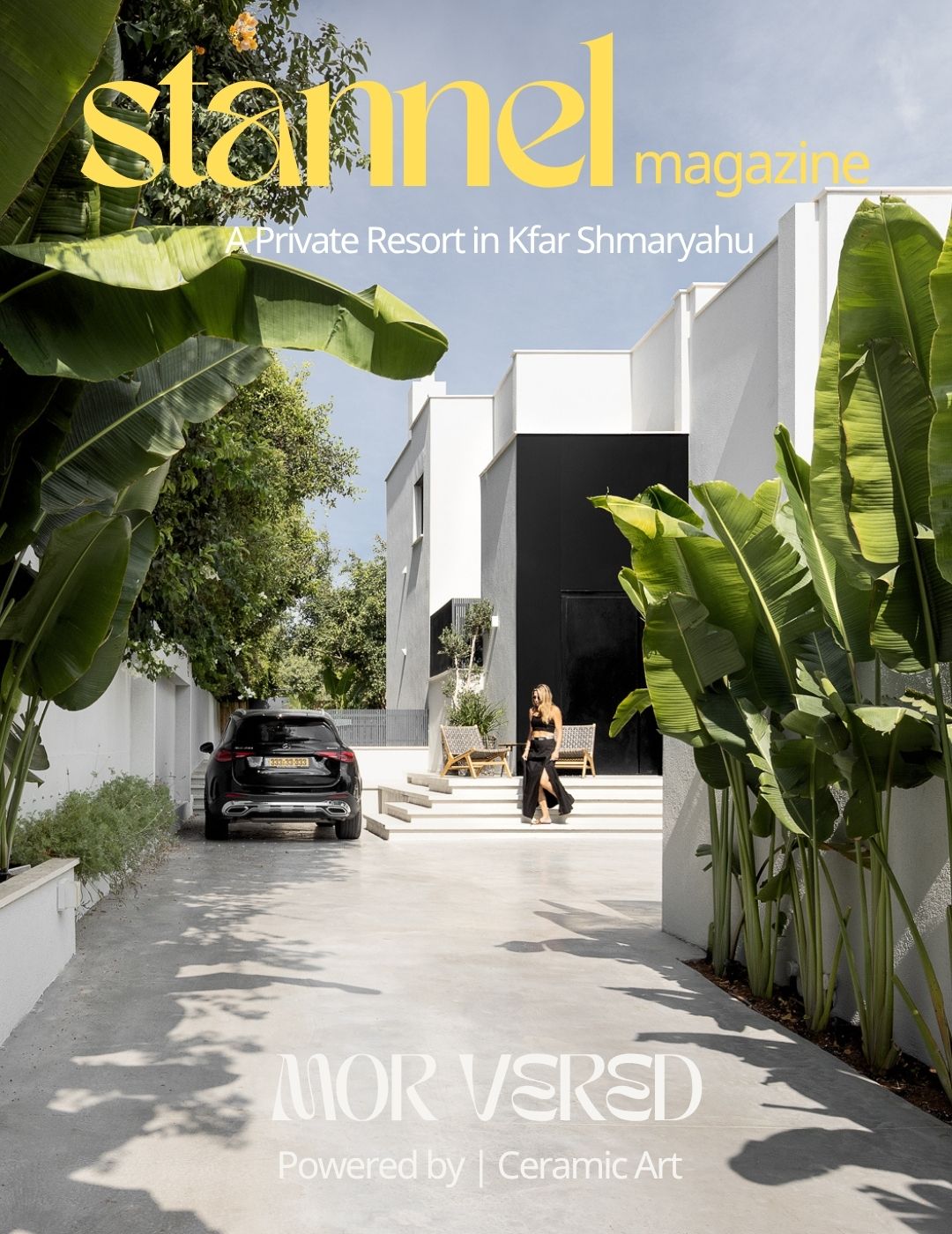
In the village of Shmaryahu, on a plot of about 700 square meters and inside a three-story house, a comprehensive renovation plan was formed that changed the house from the ground up — literally. All the walls of the building were demolished, the openings were widened, the rooms were enlarged, and the spaces were reorganized […]
In the village of Shmaryahu, on a plot of about 700 square meters and inside a three-story house, a comprehensive renovation plan was formed that changed the house from the ground up — literally. All the walls of the building were demolished, the openings were widened, the rooms were enlarged, and the spaces were reorganized […]
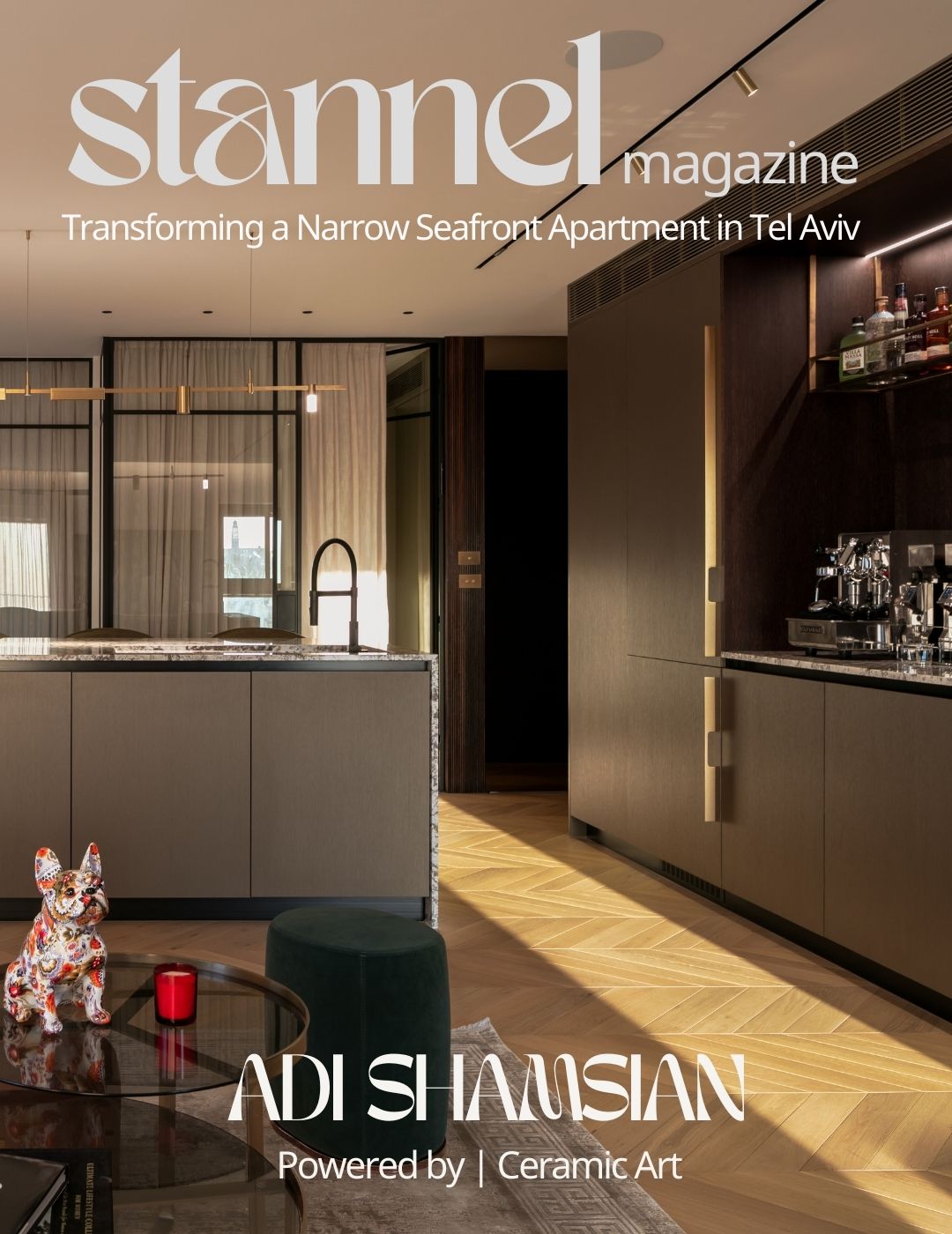
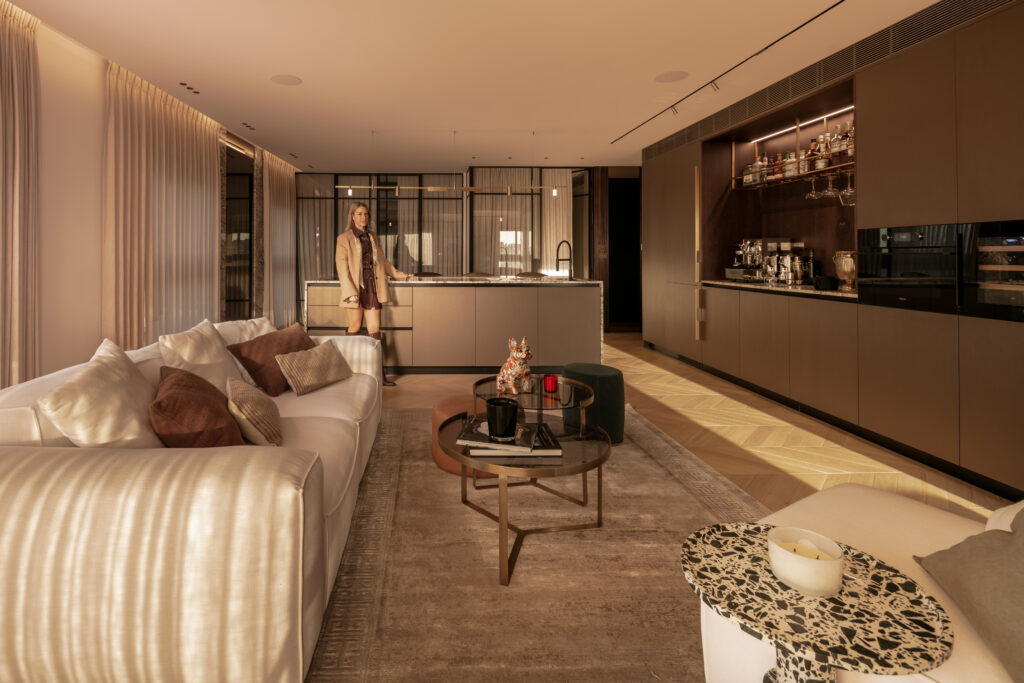
The project began with a simple request from a couple: to transform a long, narrow contractor’s apartment into a space that serves their daily lives but also allows for a sense of hospitality, freedom, and comfort of a boutique hotel. They requested clear division, precise storage, a kitchen that functions as the center of the […]
100 SQM
בכפר שמריהו, על מגרש של כ–700 מ״ר ובתוך בית בן שלוש קומות, התגבשה תכנית שיפוץ מקיפה ששינתה את הבית מן היסוד — תרתי משמע. כל קירות המבנה נהרסו, הפתחים הורחבו, החדרים הוגדלו והחללים אורגנו מחדש כך שיתאימו במדויק לאורח החיים של הזוג וילדיהם. התוצאה היא בית שעוצב מחדש כמעין ריזורט אישי, מקום מפלט מודרני שמציע […]
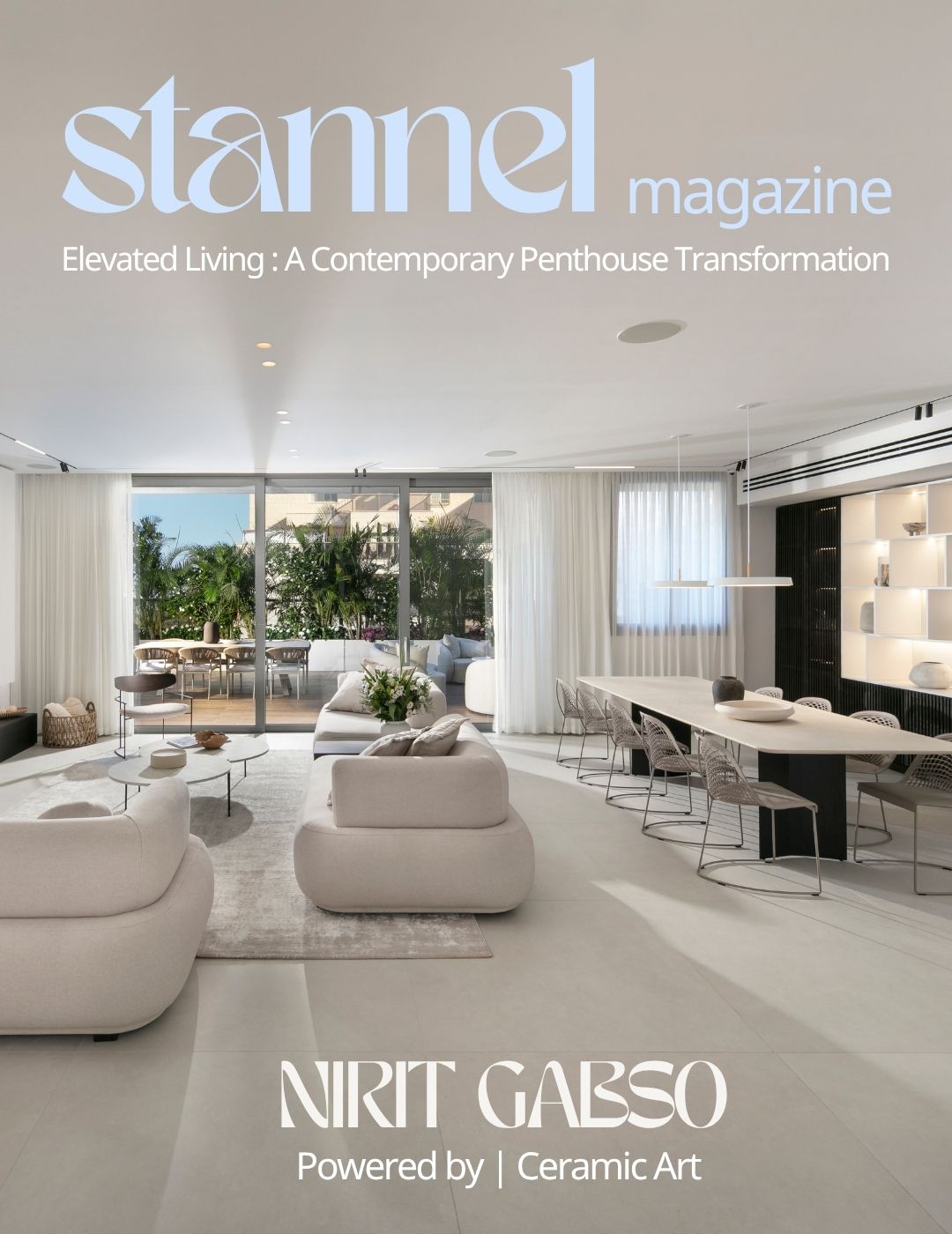
בקומה השמינית של בניין עירוני במרכז הארץ, תכננה המעצבת נירית גבסו שיפוץ מקיף לפנטהאוז בשטח של כ-200 מ”ר ומרפסת של כמעט 100 מ”ר. הדיירים , זוג ושלושה ילדים ביקשו בית מאורגן, אלגנטי ונקי, המשקף קווים עכשוויים לצד נוחות שימושית ותפקוד יומיומי יעיל. גבסו הובילה תהליך תכנון שנע בין עיצוב מדויק לפרקטיקה מוקפדת, והצליחה לגבש שפה […]
200 SQM
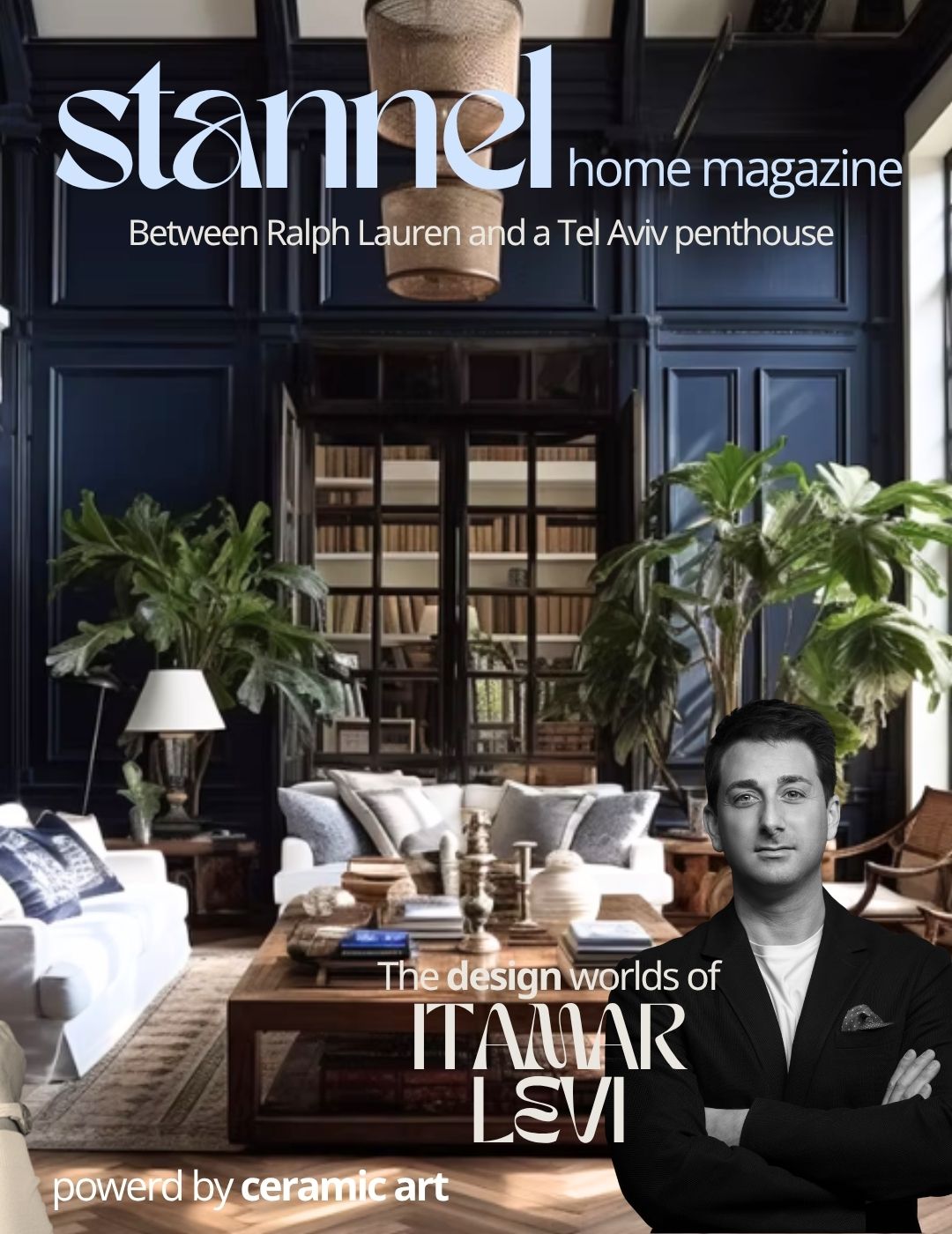
Itamar Levy came to the world of design out of a passion for art.: Painting, sculpture and even fashion design were an integral part of his life since high school. But he found his true stage when his parents built a house, and he was exposed to the process and even actively participated in it. […]
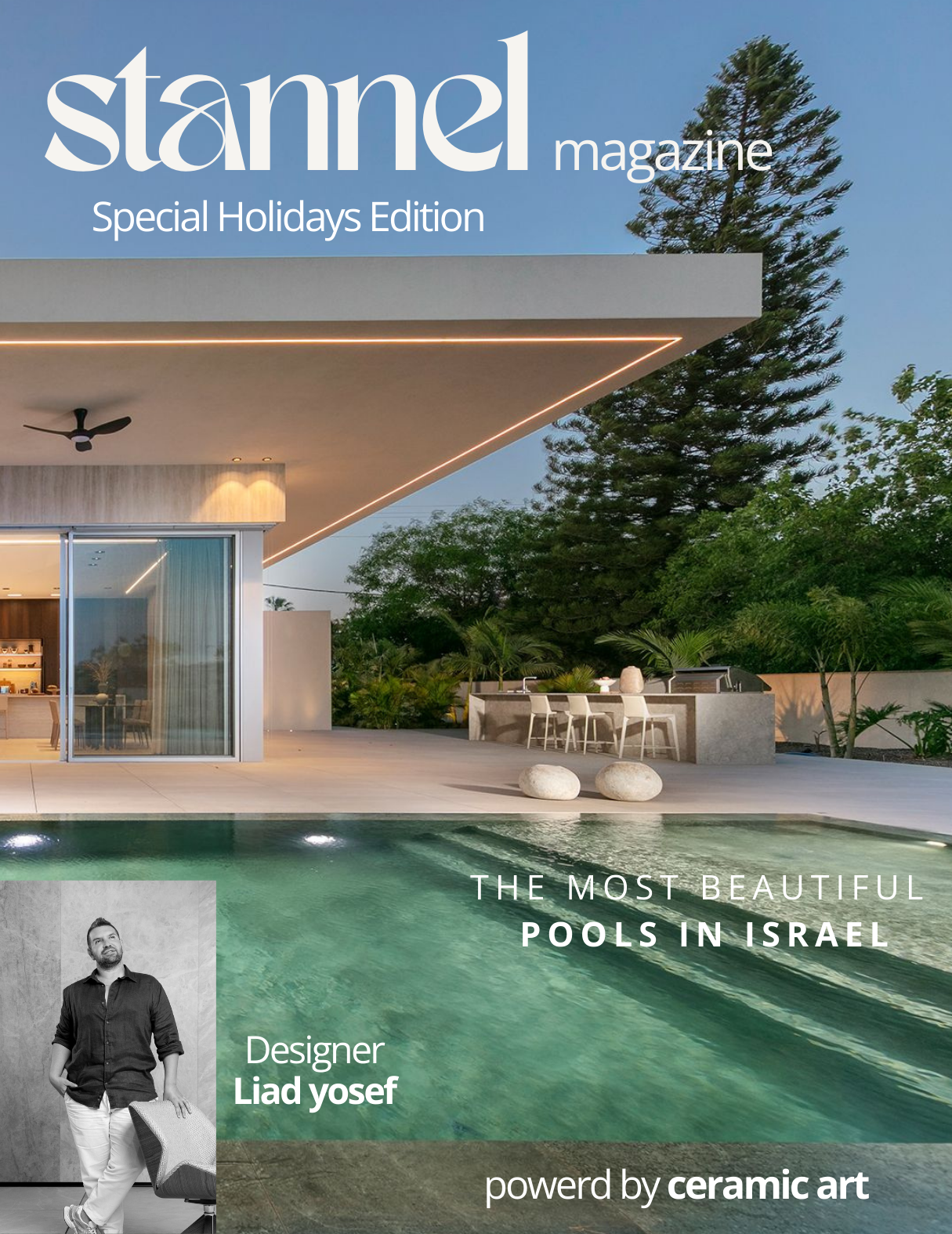
Liad Yosef, an interior designer who has already established his status as a network star and influencer in the field of design,Every project begins with a thorough introduction to the client. “I make sure to get to know all my clients personally – to research, learn, get to know their needs, their loves, their strengths, […]
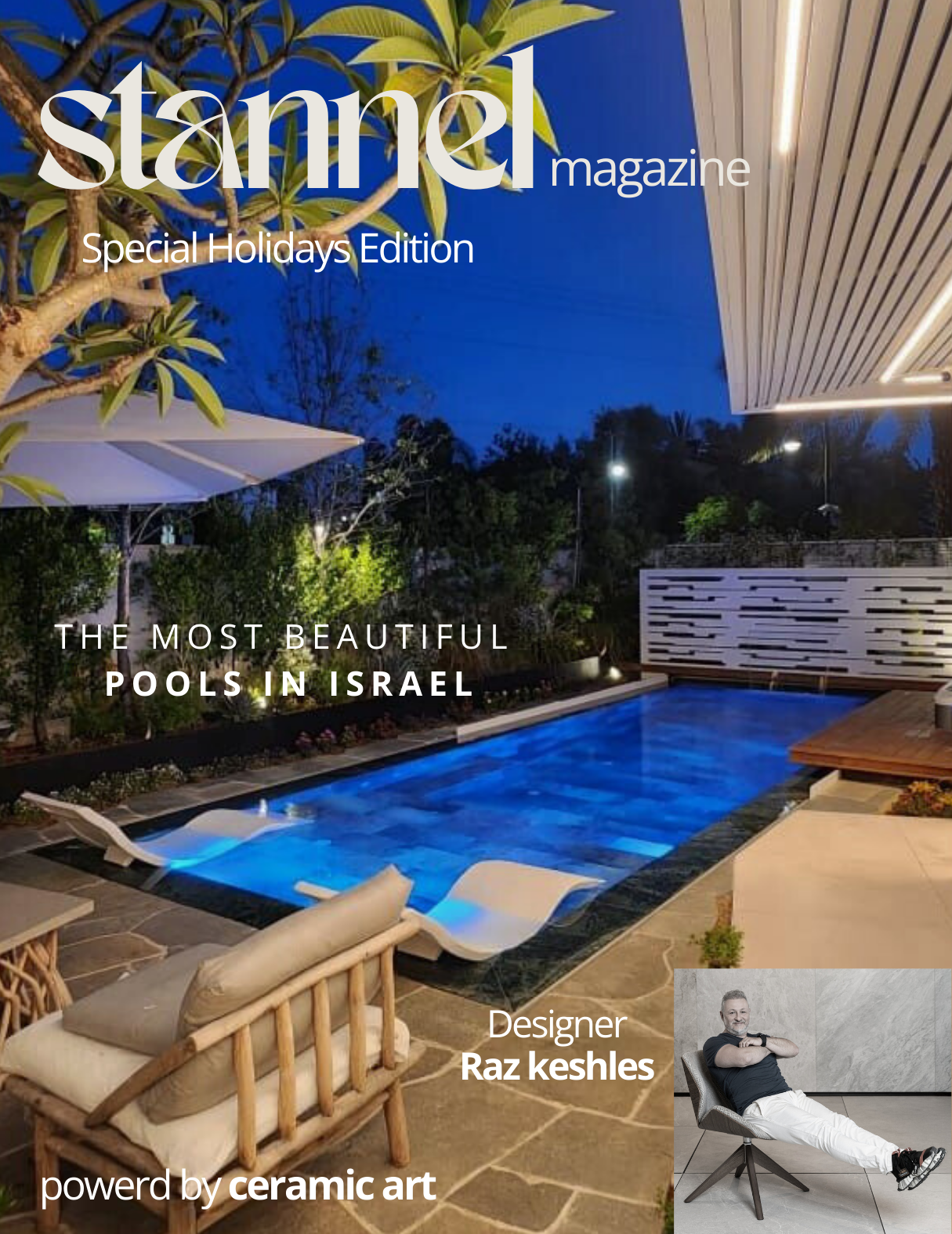
Architect Raz Keshals, who deals with private construction alongside commercial and office planning, defines his style as “dream modern” – design born from the needs of the residents and inspired by them, in a modern and contemporary style. In his projects, architectural planning, interior design and functional solutions are integrated into one harmonious language, centered […]
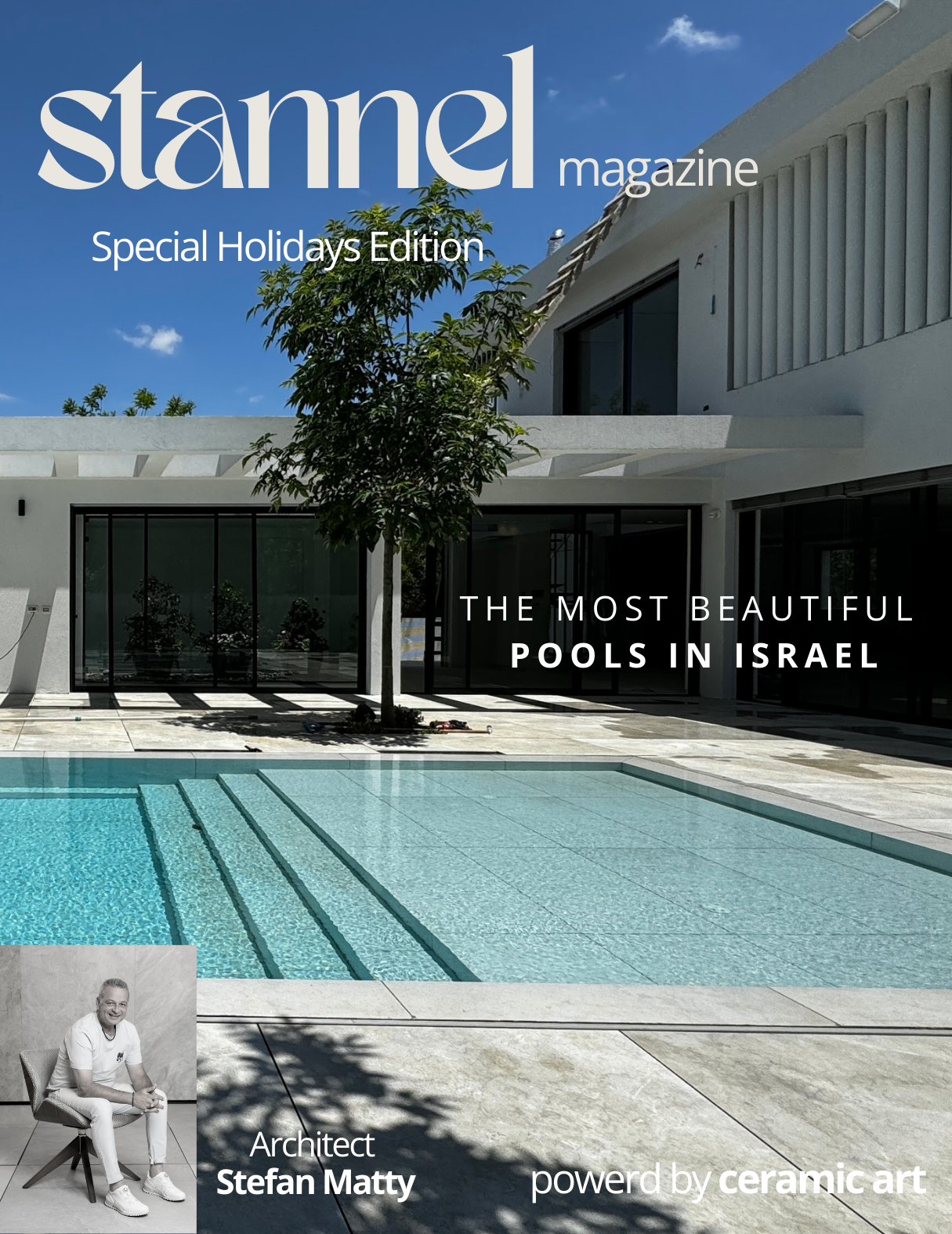
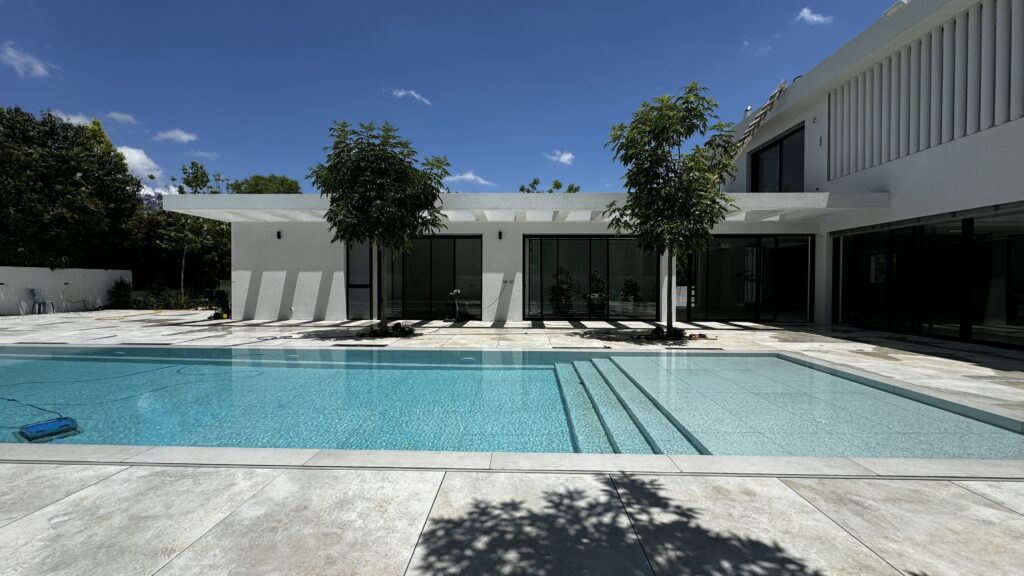
According to the vision of architect Stefan Matti, who founded his office in 2005, the architectural structure, the interior design and the landscape planning – are one. His projects are modern and minimalist, and he strives to create a lasting experience: spaces that continue to excite over time through natural light, quality materials and creative […]
650 SQM
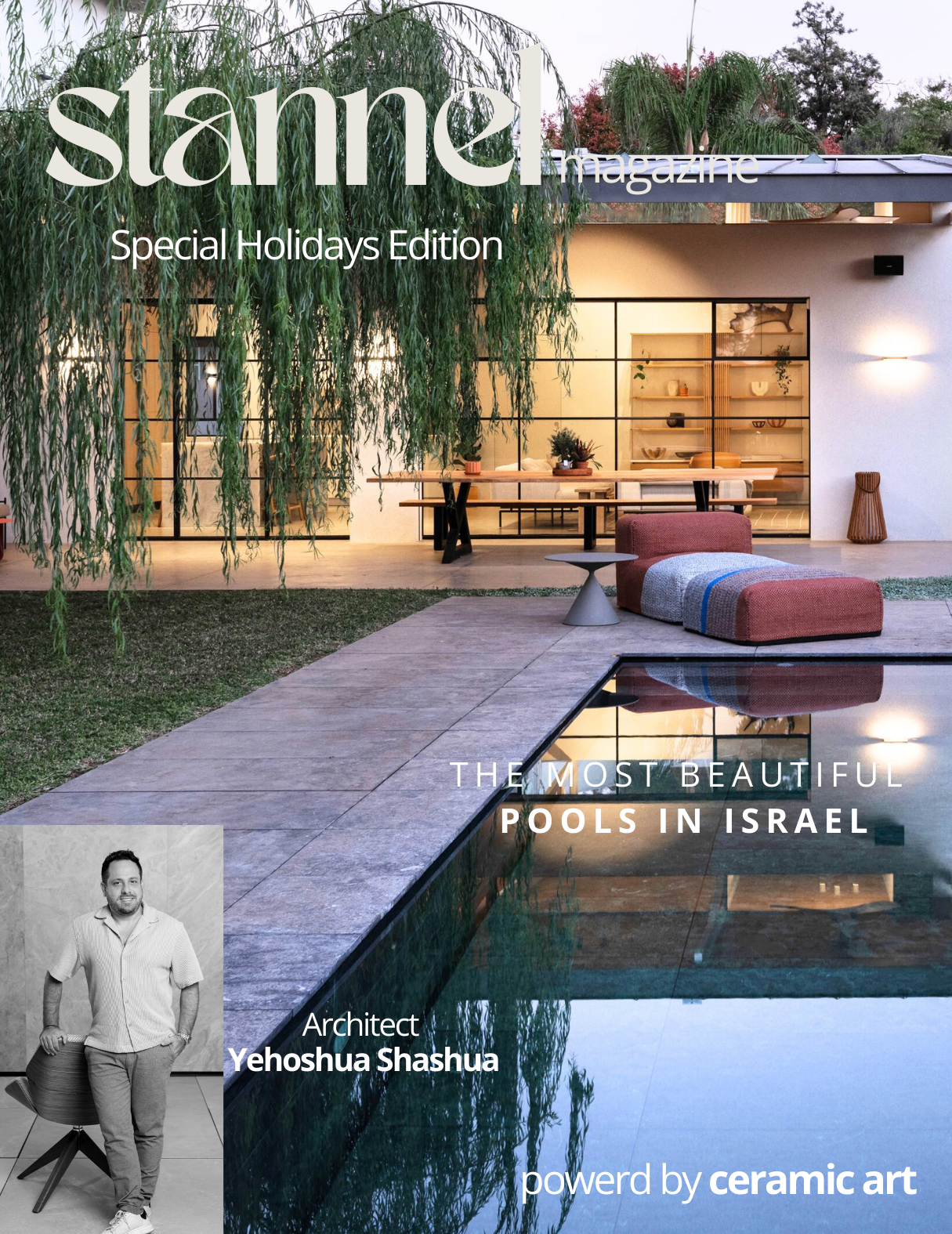
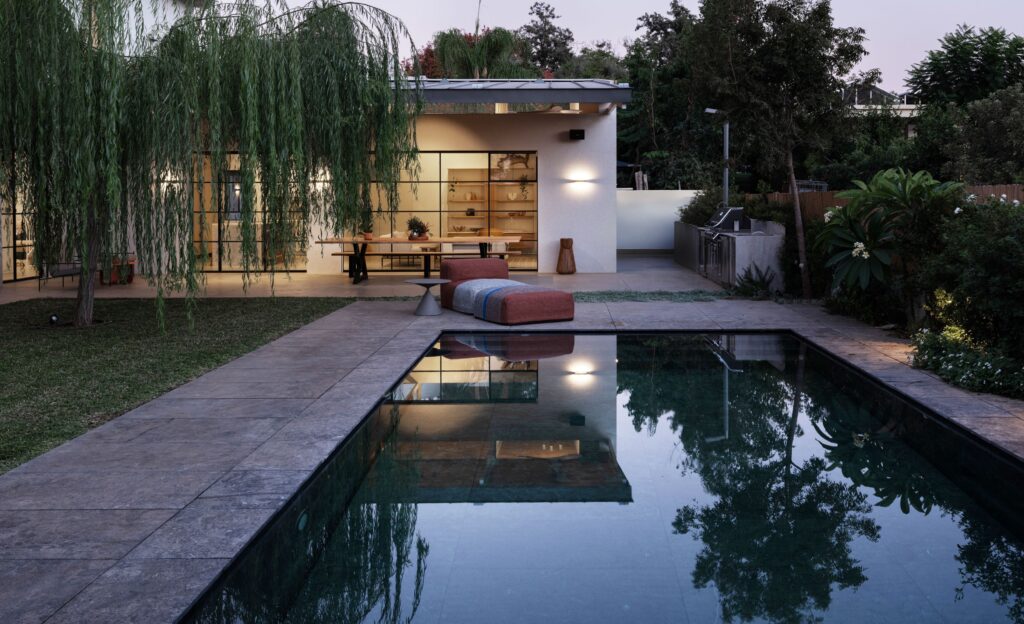
Yehoshua Shashua, an architect and interior designer, founded the firm in 2016,Within its framework, it plans and designs diverse projects of various scales in Israel and around the world – from luxury villas and apartments, through residential buildings to commercial spaces such as showrooms and galleries. Welcome to the house in Ein Vered that combines […]
500 SQM
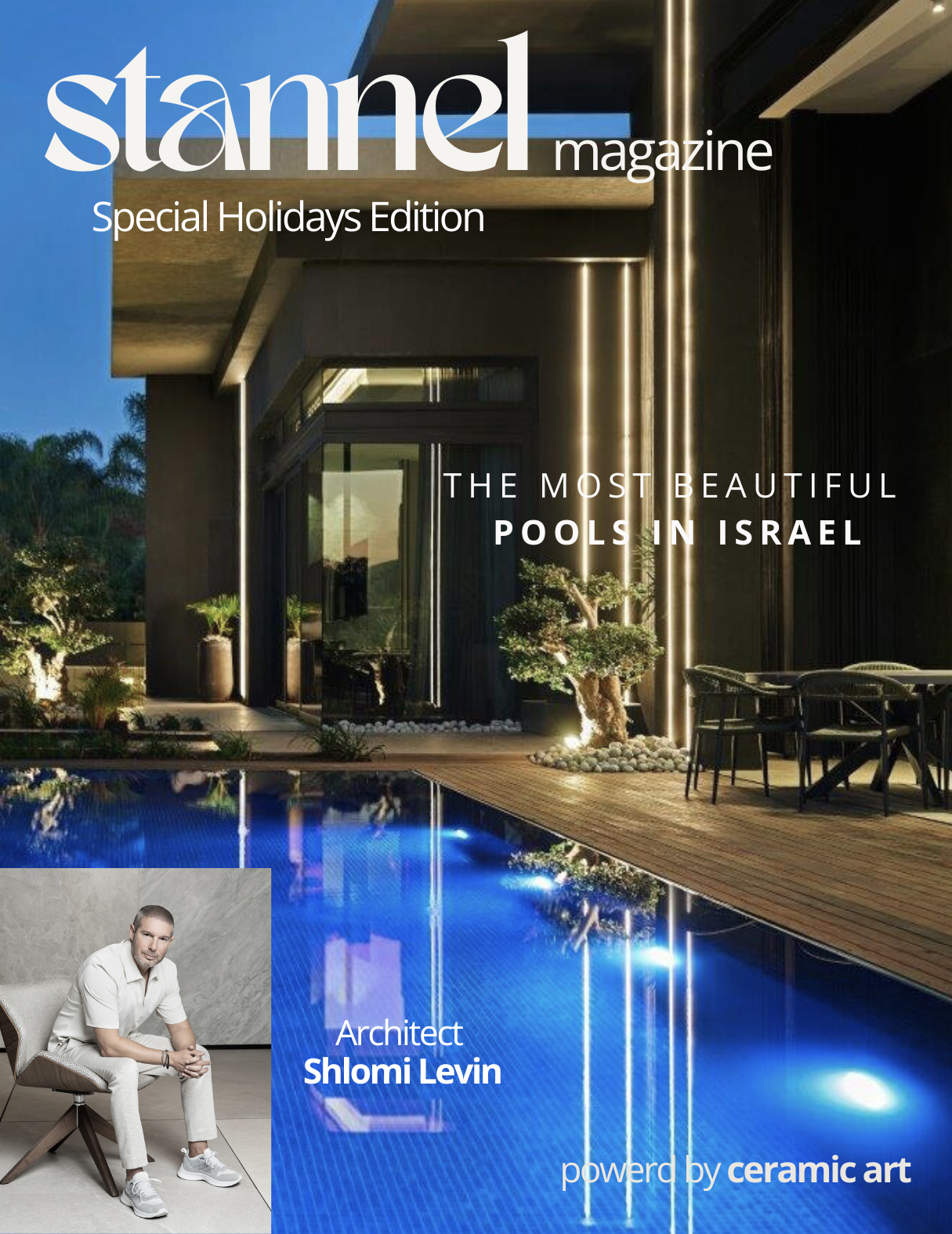
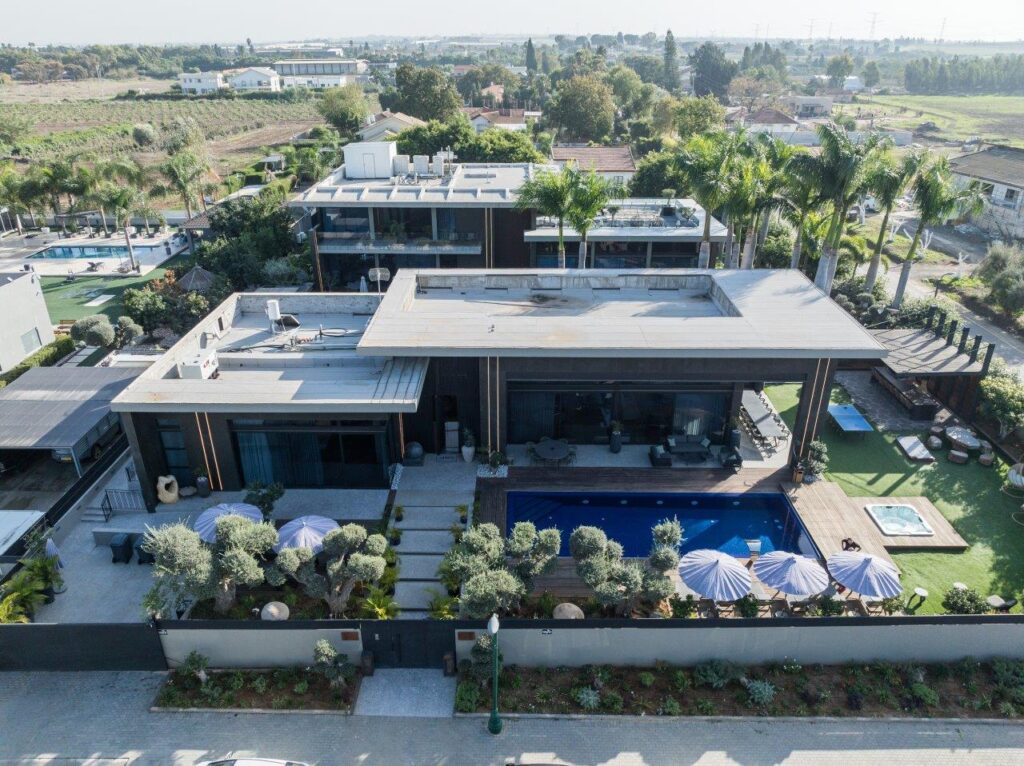
Architect Shlomi Levin, founder of a multidisciplinary boutique office, leads a holistic approach, combining architecture and interior design, to provide its clients with a comprehensive solution for all aspects of planning, design and construction. Welcome to the complex that extends over 600 square meters and includes residential suites and a shared interior space with a […]
600 SQM
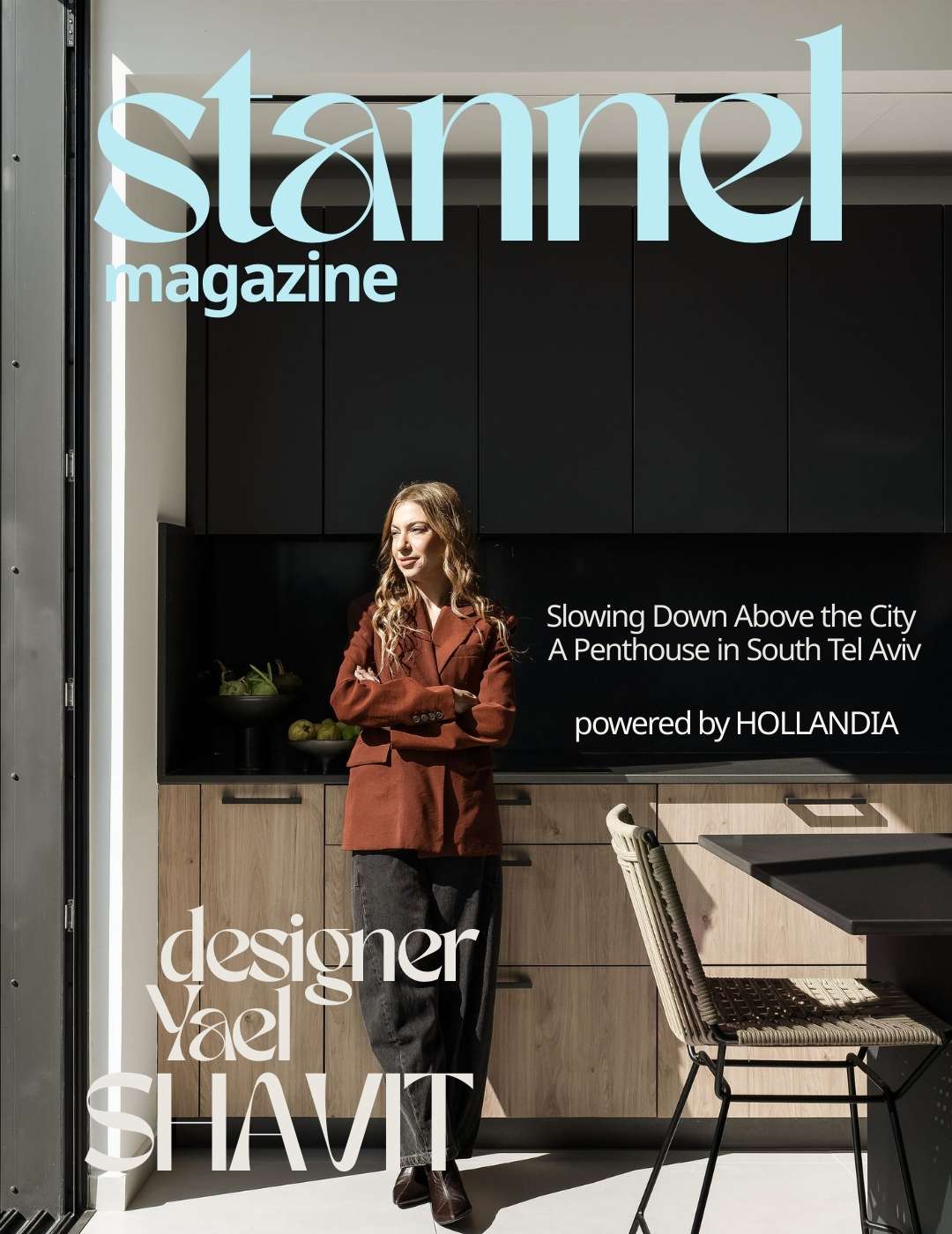
In south Tel Aviv, in the heart of an industrial area of carpentry, workshops and home design stores, the interior designer createdYael ShavitA 90-square-meter urban penthouse, with a spacious 47-square-meter balcony, that refuses to apologize for the “tough” view outside the window, and has instead turned it into the perfect setting for a life of […]
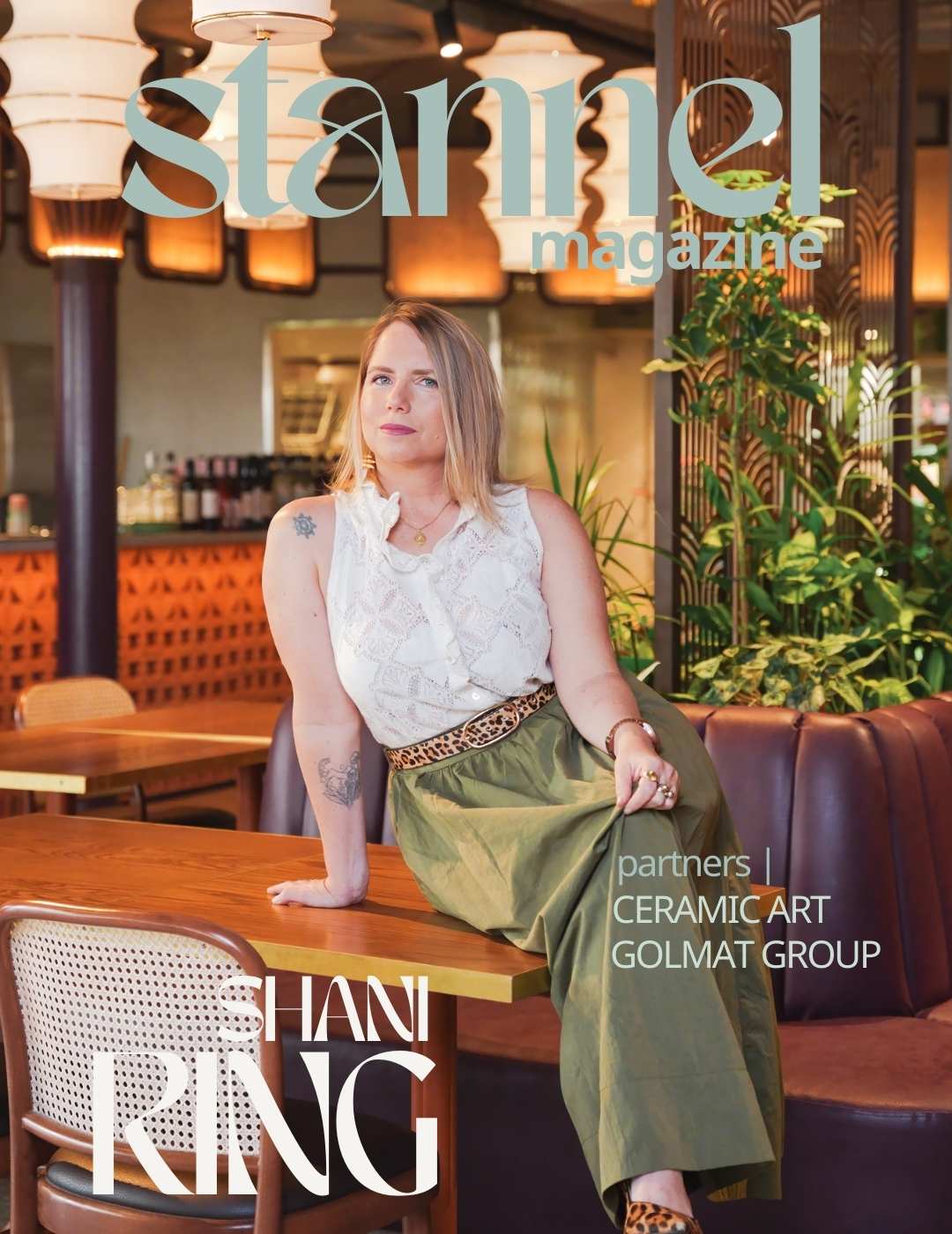
The restaurants ofStory GardenThey do not operate within the usual urban space, but rather choose to locate themselves on its quiet fringes, in the heart of green parks, on the banks of lakes, in places where the city makes room to breathe. This choice predefines the experience of visiting: no longer a restaurant as part […]
A tall Tel Aviv tower or an old neighborhood with character? For this family, the question was not geographical at all, but essential. They wanted to live the city, not observe it from the sidelines. To be a part of it, but not be swallowed up by its rhythm. The choice of an apartment in […]

Dana Elkon Architects The basics: Dana’s studio has been operating for over 15 years and is distinguished by its special attention to every detail, small and large, in the process of designing residential interiors and dressing the home. This creates a sense of completeness in the space, where all the details and accessories fit together […]
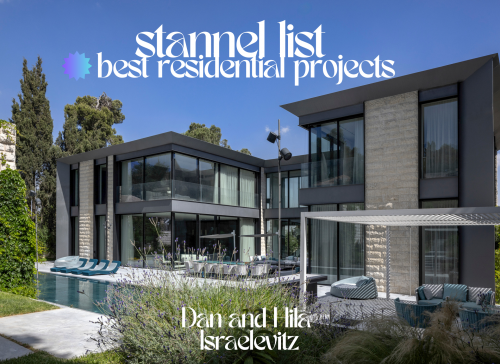
Meet Dan and Hila Israelevitz, who have headed the Israelevitz Architects firm for over twenty years. The firm specializes in planning and designing luxury homes, residential buildings, public buildings and commercial spaces, with an emphasis on support throughout the process, with the aim of creating a uniform and continuous continuity between the architectural process and […]

Meet Michal Matalon, engineer, interior designer and studio ownerHomeMakerfor planning and design. She founded the firm 17 years ago, “out of a love for architecture that combines precision, emotion and connection to the environment.” “Our way of working is based on deep listening, meticulous design, and a harmonious combination of old and new, natural and […]
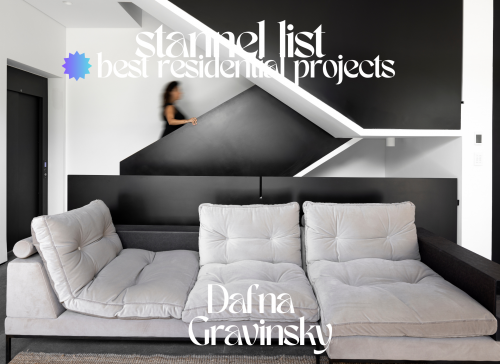
Meet Dafna Grabinsky, an interior designer and owner of an independent office for 11 years, where she designs houses, apartments and commercial spaces. In addition, she owns a design school in collaboration with the Crazy Nordic brand, and holds professional tours for designers among artisans at the flea market. Dafna defines herself as an artist […]
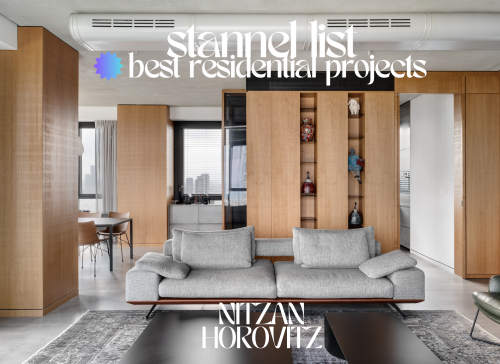
Meet Nitzan Horowitz, a multidisciplinary designer and owner of an office that has been operating for 24 years, dealing with a wide variety of projects from the private and commercial markets. The firm employs architects and interior designers, and 3D work is an integral part of the work process. “We do a significant portion of […]

Meet Kfir Galatia Azoulay – an architect, engineer and multidisciplinary designer, who heads KOT Architects. The studio has seven employees and is involved in a variety of residential, office, hotel and commercial projects. They are currently working on a 70-room boutique hotel in Budapest in a listed building, As well as establishing a new nationwide […]

Meet Anna Weil, interior designer and owner of Wantym Studio, which was established in 2021 and specializes in residential planning and design. Anna opened the studio after the split of ‘Studio Matka’, which she founded in 2007 together with Hila Gal. For seven years, she lectured in a variety of courses in the Department of […]

5 tips for renovating your home before selling Not being able to sell your apartment? It could be that you’re not preparing it enough before the date with the buyers. We have collected for you the best tips from interior designers regarding designing an apartment before selling, so that it sells – and at the […]
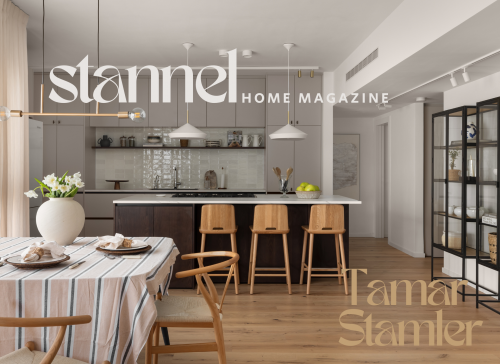
Combining and balancing ease of use and visual appearance are at the center of all areas of design, How to balance them in a way that one does not come at the expense of the other is the question for every designer. In accessible budgets and apartments in buildings, where the framework is dictated in […]
In design, there is no single right answer and there are many approaches, styles, and ways to reach the goal. In terms of design concept, there are apartments and houses where each room stands on its own. For each space, the appropriate materials, finishes, and details are selected, and each room tells a slightly different […]
Many current trends in design represent our desire to mix styles and create something that is both or in between. A space that takes elements and characteristics from all sorts of styles and worlds and mixes them together to create something new, one that suits our lifestyle and character. The Hippie style, which mixes Japanese […]
When we prepare for a house or apartment renovation, we usually know that planning and patience are required, we will take into account the investment in time and money, we will recruit professionals around us and mark everything we dream of on Pinterest. Flexibility, openness, and listening are not the first principles we think of, […]

The basics: Studio Tali Gotthilf is an interior design firm specializing in commercial design – work environments, clinics, public spaces and accommodation units in Israel and abroad. The studio was founded by interior designer Tali Gotthilf three decades ago and has expanded its creative fields over the years. The studio, which has won international design […]

There is something very romantic and nostalgic about elements that have a story and history behind them. These will always attract our eye and arouse questions and curiosity. This house, designed by Liat Post for a family in central Israel, is full of such stories. The homeowners maintain their own workshop, where they renovate and […]
Three ways to enhance the sense of space we learned from this apartment When we look at this Tel Aviv apartment and hear its story from designer Maya Sheinberger, we get a sense of expansion – a couple who became a family, a new apartment added to the building as part of the TAMA 38 […]

After years of right angles, cubes and straight lines, arches and curved lines are returning to our lives and the design of our homes. Like other trends in design and in general in recent times, this too is probably related, in one way or another, to our desire for softness and a return to nature, […]

When renovating a house or apartment, clients, with the close assistance of the designers who accompany them, are required to make countless decisions, small and large, with each decision also affecting those that follow. For many, this process is complex and very emotional, but there are tools to navigate it well and effectively. One of […]
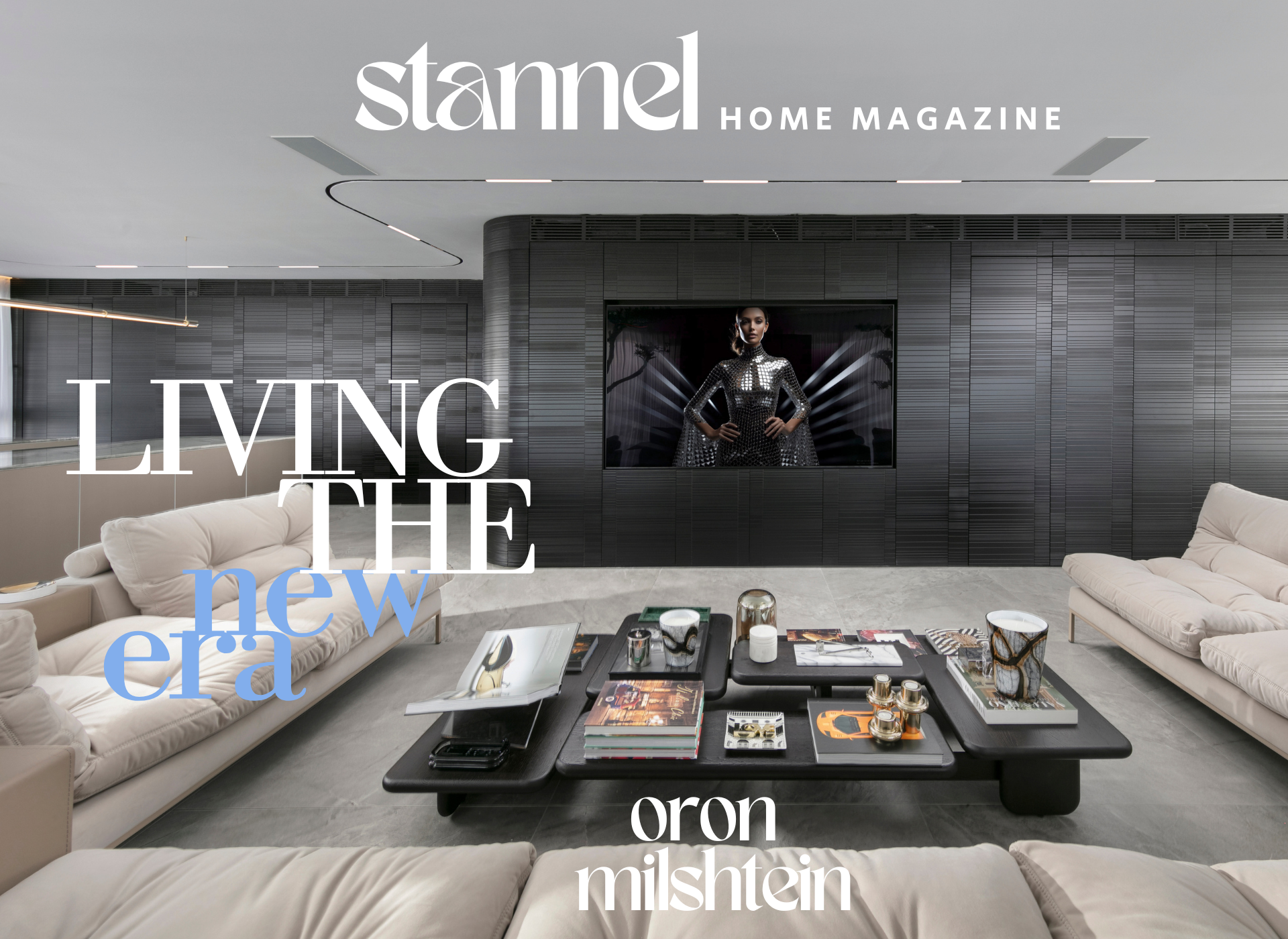
Meet Oron Milstein, Interior designer and owner of an independent studio for over 16 years, specializing in planning and designing apartments and luxury homes, alongside commercial spaces such as fashion stores and showrooms. Oron’s design language is concise and unique, and he draws inspiration from diverse fields, including fashion and art. His style is characterized […]
We all want a cozy, warm, and welcoming home. But how do you create such a home? How do you combine all the elements well to create a home that is both comfortable and practical, as well as relaxing and caressing? In this home in north Tel Aviv designed by Orly Gonen Steingart of Gonen […]

We invest a lot of time, energy and thought in choosing our living environment, the place where we will settle and build (or renovate) our home. In some cases, we will want to bring the environment into the house, at least conceptually, and create a design language that looks outward and draws inspiration from the […]
An old house on an agricultural estate in a moshav in central Israel was demolished and a new house was built in its place for a couple in their seventies. On the outside, existing olive trees were preserved and the yard was designed according to the existing slope of the lot. On the inside, the […]
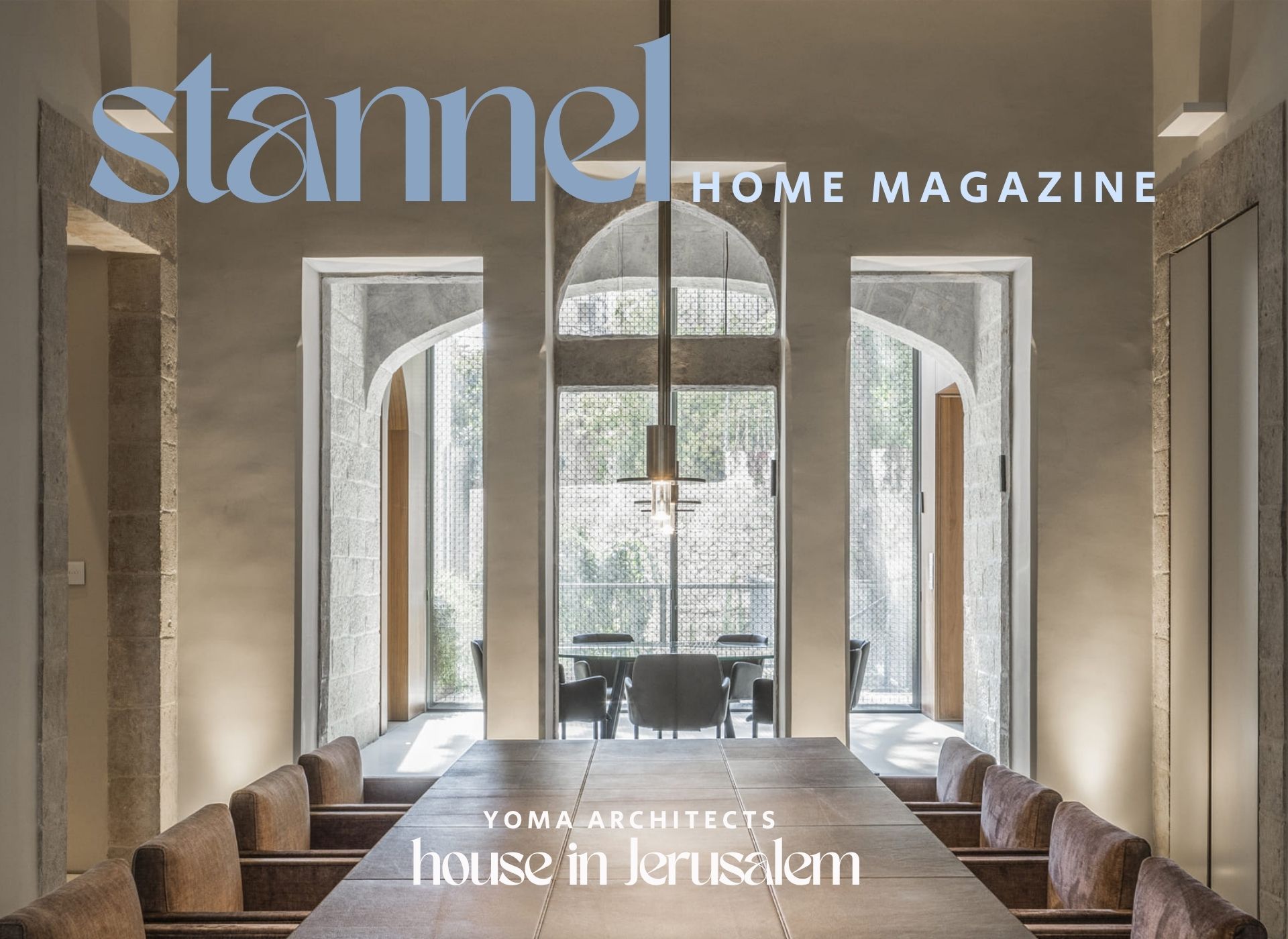
The house covers an area of 500 square meters and is surrounded by an impressive garden of approximately 400 square meters.The project, designed by Yuma Architects, owned by Netanel and Michal Meir, involved a meticulous and profound process of preserving the existing structure, alongside the integration of modern and new infrastructure and construction, while creating […]

Our magazine team receives a variety of homes. Sometimes we understand the home immediately from the first picture, but sometimes the beauty and wisdom behind the home are revealed gradually. From angle to angle, from picture to picture, we discover the thinking behind the design, the small details, the hidden surprises that make this house […]
When designing a home, it’s not just about choosing colors, materials, or furniture pieces.– This is a process that requires forward-looking thinking,Deep thinking about the present and future lifestyle and adapting to changing needs. How do you create a home that will still feel right in a decade or two? How do you maintain a […]

A family of four fell in love with the yard and pool of this home in Hod Hasharon. They approached designer Shir Steigman with the idea of a small upgrade. But after a short tour of the house, Shir realized that a more significant intervention was needed here: “They were thinking of something specific, but […]

Where design meets lifestyle
Error: Contact form not found.
Where design meets lifestyle
Where design meets lifestyle